

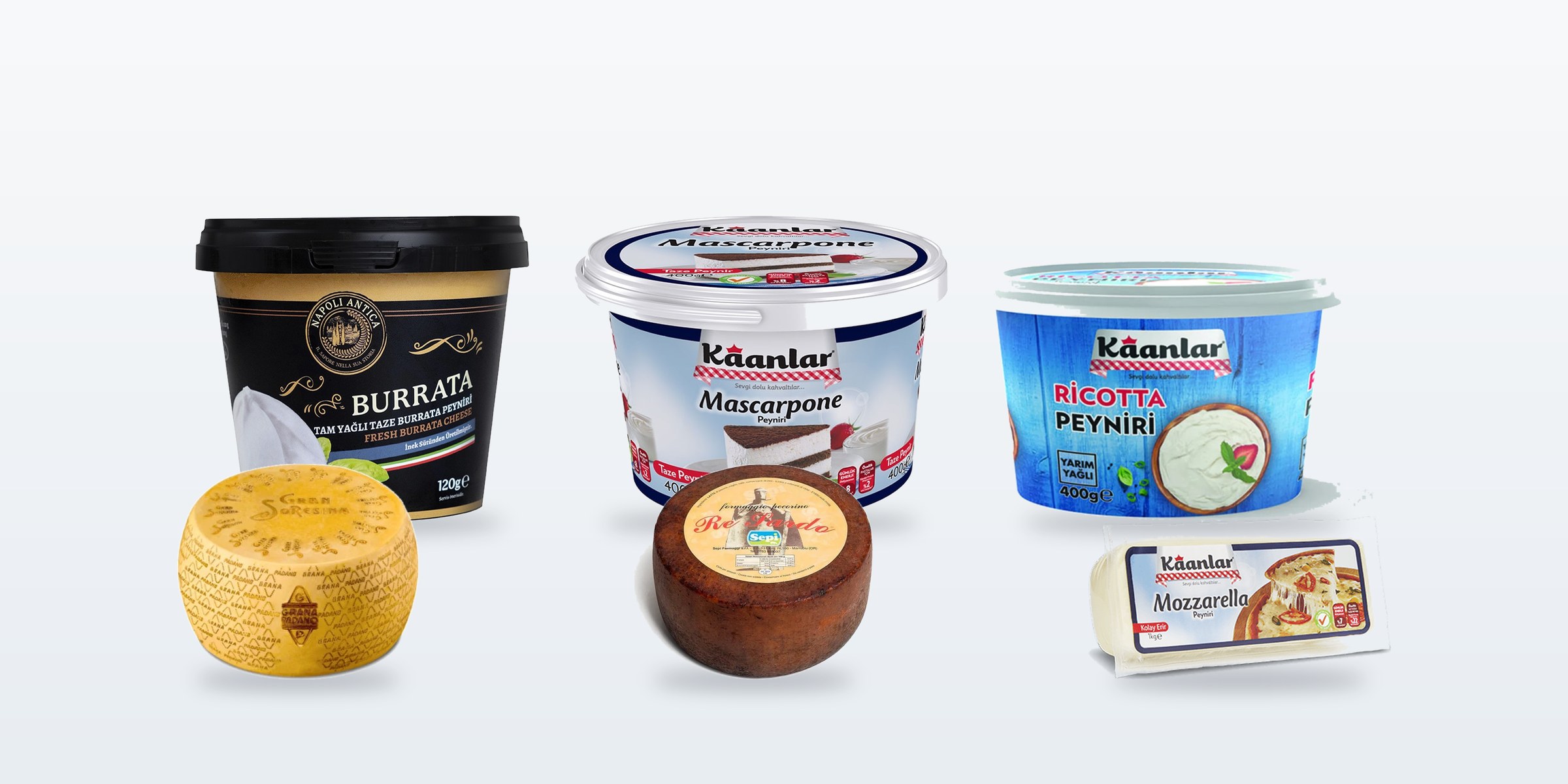
Short answer: The nine most commonly used Italian cheeses in professional kitchens are: water-curd mozzarella (fior di latte), buffalo mozzarella, pizza mozzarella (block and shredded), burrata, stracciatella, mascarpone, ricotta, Grana Padano (commonly known as “Parmesan” in stores), and pecorino. The fresh cheeses (mozzarella, burrata, stracciatella) are served cold or after baking; the heat-resistant cheeses (block mozzarella, Grana Padano, pecorino) are chosen for baking, pasta, and risotto. The tables below show which cheese is used on which dish and in which packaging.
9 Italian Cheeses at a Glance
| Cheese | Milk / raw material | Texture | Best Use |
|---|---|---|---|
| Mozzarella in water (fior di latte) | Cow’s milk | Soft, juicy | Caprese, salad, pizza (after baking) |
| Buffalo mozzarella | Buffalo milk | Richer, with a slight tang | Premium Caprese, served plain |
| Pizza mozzarella (block/grated) | Cow’s milk | Low-moisture, firm | Pizza, lasagna, baked dishes |
| Burrata | Mozzarella pouch + cream | Firm on the outside, creamy on the inside | Appetizer, salad, pizza topping |
| Stracciatella | Mozzarella strips + cream | Spoonable, creamy | Bruschetta, pasta, pizza (after baking) |
| Mascarpone | Cream | Very thick, spreadable | Tiramisu, cheesecake, sauces |
| Ricotta | Whey | Light, grainy | Lasagna, ravioli filling, desserts |
| Grana Padano (“Parmesan”) | Cow’s milk, aged | Hard, crystalline | Pasta, risotto, grated, and flaked |
| Pecorino | Sheep’s milk | Hard, salty and sharp | Grated, pasta, cheese platter |
1. Fresh mozzarella (fior di latte)
This is fresh mozzarella made from cow’s milk and stored in brine. It is used in Caprese salads and other salads for its texture and milky flavor. Draining it and letting it sit at room temperature for 15–20 minutes before serving brings out its flavor. If using it on pizza, it must be thoroughly drained; otherwise, it will make the crust soggy. The catalog features single-serving Kaanlar Water-Packed Mozzarella 125 g (24-pack), Kaanlar Water-Packed Mozzarella Mini 300 g, and Kaanlar Water-Packed Mozzarella 3.5 kg for high-volume use.
2. Buffalo mozzarella
Made from buffalo milk; it is fattier than cow’s milk mozzarella and has a slightly tangy flavor. Because it is more expensive, it is mostly used in premium dishes served plain. Options: Mandamia Buffalo Mozzarella 250 g and Mandamia Mini Buffalo Mozzarella 250 g.
3. Pizza Mozzarella: Block and Pre-grated
Low-moisture mozzarella is used for pizza and oven-baked dishes; it melts, stretches, and doesn’t release water into the dough. Block mozzarella is grated in the kitchen, while pre-grated mozzarella saves time. Pre-grated varieties may contain an anti-caking agent; check the ingredients list. Options: Kaanlar Mozzarella Block 1 Kg, Kaanlar Grated Mozzarella 1000 G, and Teksüt Grated Mozzarella 1 Kg. For more information on the differences between all types of mozzarella, see our guide to mozzarella varieties.
4. Burrata
Burrata is made by filling a pouch of mozzarella dough with stracciatella; when cut open, the filling oozes out. It is a fresh cheese with a short shelf life and is served plain and cold: as an appetizer with tomatoes, olive oil, basil, or figs. It is added to pizza after it comes out of the oven. Options in the catalog: Napoli Antica Burrata 120 g, Napoli Antica Manda Burrata 80 g, Mandamia Burrata 100 g, Mandamia Burrata 150 g, and Burrata Buffa 150 g. Check out our burrata guide for detailed usage tips.
5. Stracciatella
This is the filling inside the burrata: thin strips of mozzarella mixed with cream. When purchased separately, it is portioned by the spoonful; it’s used on bruschetta, cold pasta, and freshly baked pizza. It doesn’t provide the same visual appeal as burrata on a plate, but it offers portion flexibility and results in minimal waste. In the catalog: Stracciatella Cheese (kg).
6. Mascarpone
Mascarpone is made from cream, which is why it is very thick and rich. It is the main cheese used in tiramisu and is also used in cheesecakes and creamy sauces. It should be handled cold and whipped only lightly; over-whipping can cause it to curdle. The catalog features Kaanlar Mascarpone 400 g and Kaanlar Mascarpone 5 kg. See our mascarpone guide for tiramisu and storage.
7. Ricotta
Ricotta is made by reheating the whey left over from cheese production; its name means “re-cooked.” With its light and grainy texture, it is used in lasagna, ravioli, and cannelloni fillings, as well as in Italian-style cheesecake. Options: Kaanlar Ricotta 400 g and Kaanlar Ricotta 2.5 kg.
8. Grana Padano and “Parmesan”
In Turkey, the term “Parmesan” is generally used to refer to hard Italian cheeses; however, Grana Padano and Parmigiano Reggiano are separate cheeses with protected designations of origin (DOP). The most notable difference is the aging period:
| Features | Grana Padano DOP | Parmigiano Reggiano DOP |
|---|---|---|
| Shortest maturation period | 9 months | 12 months |
| Long-aged category | Riserva: Aged for more than 20 months | Available for sale after 30 months or more |
| Taste | Softer, buttery | More dense, nutty |
| In the Kitchen | Large-capacity grater, pasta, oven | Final touches, serving the flakes |
The catalog includes Grana Padano Parmesan Cheese (kg) and Grated Parmesan Cheese (kg) for quick use. Read the ingredient list on the grated product; it may not have the same flavor as the whole wheel of cheese.
9. Pecorino
Pecorino is the general term for hard Italian cheeses made from sheep’s milk; they are saltier and have a sharper flavor than hard cheeses made from cow’s milk. It is grated and used in pasta dishes or on a cheese platter. The Sepi Re Sardo Pecorino listed in the catalog is a sheep’s milk pecorino produced in Sardinia; it is not the same product as Pecorino Romano DOP and should not be referred to by that name on the menu.
Which Italian cheese is added to pizza and when?
| Cheese | When | Note |
|---|---|---|
| Mozzarella block / grated | Before baking | Main melting cheese |
| Mozzarella in Water | Before baking, make sure it’s well-drained | Drain it so it doesn’t release any water |
| Grana Padano / Pecorino | A small amount before baking or grated afterward | Adds salt and depth |
| Burrata / Stracciatella | After baking | It loses its texture when heated |
| Ricotta | Before baking, with a spoon | On white pizzas |
For issues with oil seepage and browning on pizza, check out our guide to pizza cheese.
Storage: The Difference Between Fresh and Hard Cheese
- Fresh cheeses (mozzarella in brine, burrata, stracciatella, ricotta, mascarpone) have a short shelf life; they must be kept in the cold chain and consumed shortly after opening. The brine from mozzarella in brine should not be discarded; the cheese is stored in it.
- Hard cheeses (Grana Padano, pecorino) have a longer shelf life; the cut surface should be wrapped to prevent exposure to air.
- Always refer to the packaging label for the storage temperature and shelf life of each product.
Wholesale Orders and Delivery
Santral Gıda delivers to Istanbul’s 39 districts 6 days a week, with next-day delivery; fresh cheeses are transported via the cold chain using our own refrigerated vehicles. The price shown on product pages is the price per item; special prices based on quantity are available for bulk orders and regular purchases. You can view all our cheeses in the “Cheeses” category and in our digital catalog; please contact us for a quote. For our restaurant supply offerings, please visit our restaurant supply page.
Summary
- Fresh Italian cheeses (mozzarella, burrata, stracciatella) are used for cold dishes and after baking.
- For pizza and baking, choose low-moisture block or shredded mozzarella.
- Mascarpone is made from cream, while ricotta is made from whey; they are used differently in desserts and fillings.
- Grana Padano is aged for at least 9 months, while Parmigiano Reggiano is aged for at least 12 months; the two are not the same cheese.
- Pecorino is a sheep’s milk cheese; use the product’s full name on the menu.
You can source all of these cheeses from Santral Gıda, an Istanbul-based wholesale food supplier that delivers to restaurant kitchens the very next day.


