


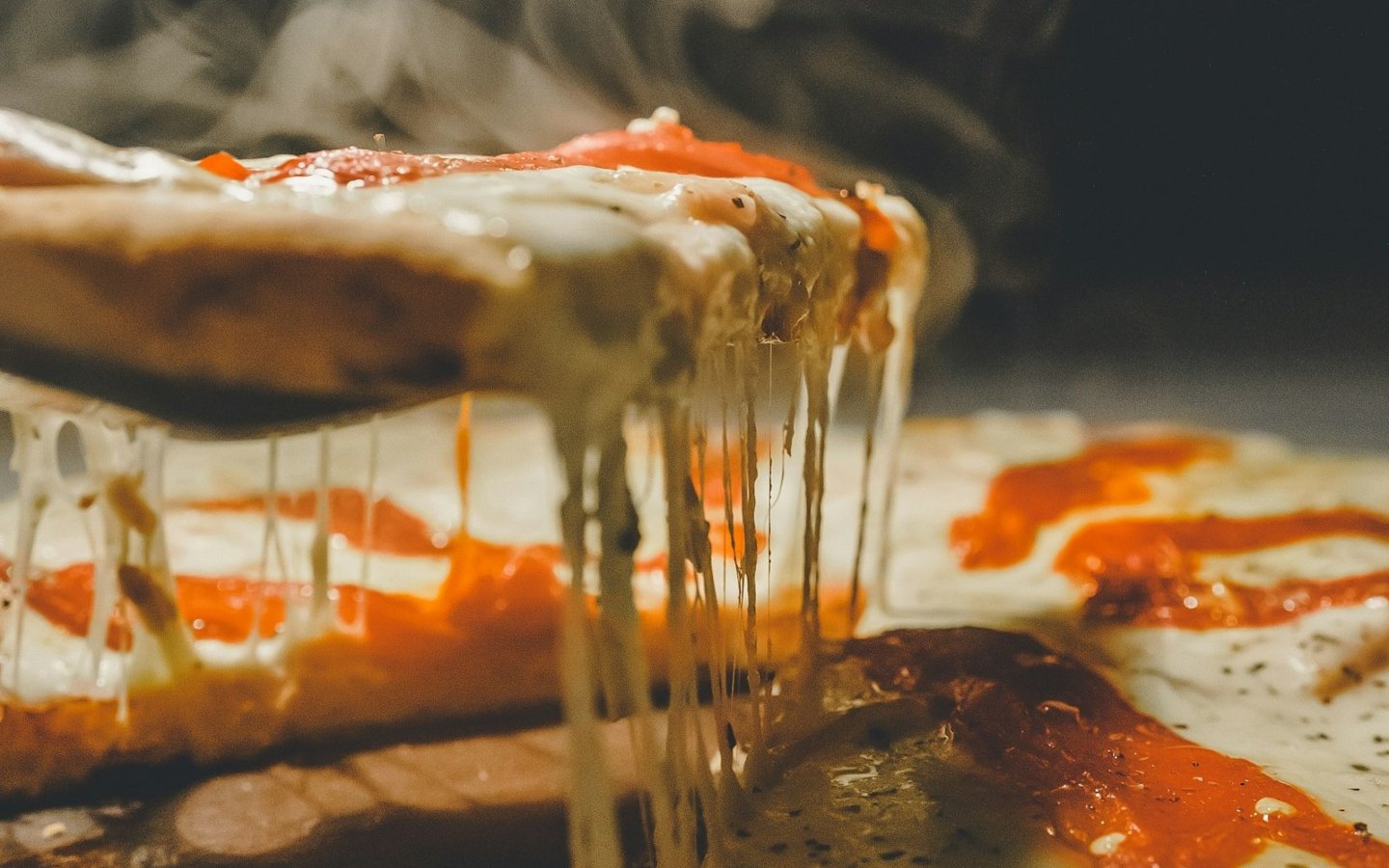
In short: It’s not the brand that determines how pizza cheese behaves in the oven, but rather three factors: moisture content, fat-to-protein ratio, and aging time. Fat separation refers to the milk fat that is released as the cheese melts. Browning begins when the cheese loses about one-third of its moisture—and this threshold occurs at different temperatures for each type of cheese. Below, you’ll find an explanation of the mechanism behind each issue, the controls you have in the kitchen, and a chart to help you decide between water, block, or grated cheese.
- Oily seepage isn’t a defect; it’s the price of fluidity: the faster the cheese flows, the more oil it releases.
- Browning begins when the cheese loses approximately 30% of its moisture; mozzarella begins to brown at 140 °C, while Gouda and Edam begin to brown at 160–180 °C.
- When it cools, the rubbery texture is usually caused by the protein network in semi-fat cheese, not by overcooking.
- Mozzarella in water is not suitable for pizza —with a moisture content of 60–70%, it makes the dough soggy. The cheese used on pizza is block (low-moisture) mozzarella.
- The anti-caking agents in grated cheese alter its melting and browning behavior; convenience comes at a technical cost.
Why does pizza cheese release oil?
When cheese is heated, the casein (milk protein) network contracts. This contraction pushes out the water and the milk fat that had been trapped within the protein network up to that point—these are the yellow pools you see on the plate. As stated by the Wisconsin Dairy Research Center: “The higher the flow rate and volume of the cheese, the more milk fat is released.”
This means that releasing fat is actually a natural result of good melting. A cheese that doesn’t release any fat probably isn’t melting well enough. The goal isn’t zero fat, but controlled fat release.
Tools at your disposal in the kitchen:
- Reduce the fat content: Full-fat mozzarella melts more freely and releases more fat. Low-fat mozzarella releases less fat—but in return, it melts less freely and hardens as it cools.
- Shorten the baking time: The longer the cheese remains melted, the more fat it releases. Achieving the same baking result at a higher temperature in a shorter amount of time reduces fat separation.
- Add the cheese late: When baking thick dough that requires a long baking time, adding the cheese during the last third of the baking process shortens the total baking time.
- Use a coarse grater: A fine grater means a larger surface area; it melts faster, flows faster, and releases more fat.
Why does cheese turn brown or burn?
Darkening begins after the cheese surface has lost approximately 30% of its moisture. A peer-reviewed study from 2025 measured this threshold across different types of cheese and found a surprising result: while the threshold percentage does not vary from cheese to cheese, the temperature at which that threshold is reached varies significantly.
| Cheese | The temperature at which curdling begins | Practical implication |
|---|---|---|
| Mozzarella | 140 °C | Browns quickly — requires short cooking time at high temperature |
| Processed cheddar | 140 °C | Behaves similarly to mozzarella |
| Aged cheddar | 160 °C | More forgiving |
| Gouda / Edam | 160–180 °C | Melting point is high — an advantage for products that require long cooking times |
The same study showed that two other variables had a significant effect: oven temperature and cheese mass. As the temperature increases, moisture loss accelerates (a statistically very strong effect), and as the amount of cheese on the plate increases, the total duration of moisture loss lengthens.
The practical rule that follows from this is: if your cheese is browning, check the cheese’s moisture content first—not the oven temperature. Cheese that is very dry or grated very finely will brown much faster in the same oven over the same amount of time.
The aging period is also a key factor. According to industry sources, mozzarella that has aged for 14–28 days browns evenly and consistently, while very fresh mozzarella—aged 5–6 days—can brown excessively, and the grating marks may still be visible when it comes out of the oven. Contrary to what you might think, the freshness of the product you receive from your supplier does not always mean “the fresher, the better.”
Why does cheese become rubbery when it cools?
The answer to this question is often sought in the wrong place in most kitchens: it’s not overcooking, but the fat content. In an industry laboratory test, half-fat mozzarella developed a noticeably hard and rubbery texture when cooled, whereas full-fat mozzarella did not exhibit this behavior. The elongation distances measured in the same test also highlight the difference:
| Cheese | Elongation |
|---|---|
| Full-fat mozzarella | 6.4 mm |
| 2-year-aged provolone | 6.2 mm |
| Cheddar | 5.0 mm |
| Semi-fat mozzarella | 4.8 mm |
| White cheese / feta | 0 mm (does not melt) |
This is a key factor for businesses that offer delivery: if the product reaches the customer 20 minutes later, a pizza made with semi-fat cheese will become hard in the box. The same pizza made with full-fat cheese retains its texture longer.
The chemistry behind stretchiness is the calcium-casein balance. As the cheese’s pH decreases, the calcium bound to casein is replaced by hydrogen, and the cheese’s meltability and stretchability increase. However, when the pH drops below 4.6, the casein clumps excessively, and the stretch completely breaks down. That is why a very acidic cheese is not a “melting and stretching” cheese.
In water, in a block, or grated? The right choice for pizza
The cheese on the pizza is block (low-moisture) mozzarella. When mozzarella is used on pizza, it makes the dough soggy because it has a much higher moisture content. Mozzarella is best suited for dishes served raw: caprese, salads, meze, and cold dishes.
| Format | Moisture | Oven Performance | Proper Use |
|---|---|---|---|
| Mozzarella in water | ~60–70% | Releases water, does not turn brown | Caprese, salad, appetizer, cold platter |
| Block of mozzarella | ~45–52% | Melts, browns, stretches | Pizza, toast, gratin, baked goods |
| Grated mozzarella | Same as the block | Varies depending on the ingredient | Labor savings during peak service |
If you’re going to use mozzarella on pizza, there are two essential steps: drain and pat dry, and add it during the last few minutes of baking. Even so, there’s still a risk of the bottom of the crust getting soggy.
Do the additives in grated cheese really make a difference?
Yes—and this is the technical cost of that convenience. Starch- or cellulose-based anti-caking agents (such as E460) are used in pre-grated cheese to prevent the pieces from sticking together. These substances coat the surface of the cheese and alter its melting and browning behavior; industry sources therefore recommend grating fresh cheese from a block in professional kitchens.
The decision is economic, not ideological:
- Grate it from a block —if pizza quality is a priority, if your daily volume allows for grating, and if the presentation on the plate is important.
- Buy a ready-made grater —if serving speed is critical, if there’s no time to grate at the station, or if you want the same result across multiple locations.
If you’re using a pre-grated cheese, you can reduce the intensity by choosing a coarse grate and adding the cheese toward the end of the cooking process.
What changes depending on the type of oven?
The type of oven determines how quickly the cheese will reach its browning threshold. The table above (140 °C / 160–180 °C) serves as the basis for this decision.
- Stone oven (high temperature, short cooking time): Since mozzarella begins to brown at 140 °C, the risk here is over-browning. Use a coarse grater or slices; avoid a fine grater.
- Conveyor oven (medium temperature, fixed time): The advantage is consistency. When the amount of cheese and the thickness of the shavings are kept constant, the results are reproducible.
- Convection oven (air circulation): The circulating air accelerates moisture loss—meaning the 30% threshold is reached more quickly. The same cheese browns and dries faster than it would in a static oven.
- Salamander / top heat: The surface temperature is very high; for gratin and top-broiling applications, cheeses that brown slowly—such as Gouda—are more suitable.
A single type of cheese, or a blend?
The main trade-off here is this: protein browns, fat melts. A high-protein cheese browns well but doesn’t melt much; a high-fat cheese melts well but doesn’t brown easily. The point of blending is to balance these two factors.
According to industry sources, the most common starting ratio is 75–80% semi-fat + 20–25% full-fat mozzarella; adding 10–20% cheddar is recommended to enhance the flavor. These are practical ratios based on a single expert’s opinion, not a universal rule—test them in your own oven with small batches.
Quick Troubleshooting Chart
| Problem | Possible cause | First step to try |
|---|---|---|
| Oil is accumulating on the surface | High fat content, long flow time | Add the cheese later, and use a coarse grater |
| It dries out/burns very quickly | Fine grater, low moisture, convection | Use a coarser grater; add the cheese later |
| It doesn’t brown at all; it stays pale | Low oven temperature, slices are too thick | Increase the temperature or add the cheese earlier |
| It hardens when it cools | Semi-fat cheese | Switch to full-fat cheese or make a blend |
| The bottom of the dough stays soggy | Using mozzarella in water | Switch to block mozzarella |
| It doesn’t stretch; it breaks | Excessively acidic cheese (pH below 4.6) | Replace the product—cooking won’t fix it |
| Grater marks remain after baking | Very fresh mozzarella | Ask for a more mature batch |
Pizza cheese options at Santral Gıda
Having all three formats available allows you to choose the right one:
- Block (the right format for pizza): Mozzarella Block Kaanlar 1 KG
- Pre-grated cheese (speed priority): Kaanlar 1 kg, Teksüt 1 kg, Bahçıvan 2 kg
- In water (for cold serving): 3.5 kg, 500 g, 125 g × 24, mini 300 g
- For the blend: Gouda cheese (matures slowly), Kiana Full-Fat Fresh Kashar (2 kg), Grana Padano
- Cold dish: Burrata Napoli Antica 120 g
For a product-based summary of the differences between formats, please see our guide to mozzarella varieties; for the entire range, please see the ” Cheeses ” category.
Sources and Reliability Note
The moisture loss threshold, browning temperatures, and calcium-casein mechanism discussed in this article are based on peer-reviewed studies and publications from the Dairy Science Research Center. Elongation measurements, ripening intervals, and blending ratios, however, are practical data from a single source found in industry publications—we recommend verifying these in your own oven.
- Wisconsin Center for Dairy Research — The Melting and Stretching of Cheese, Dairy Pipeline
- MDPI Foods (2025) — Moisture Loss from Cheese During Baking: Influence of Cheese Type, Cheese Mass, and Temperature
- PMQ Pizza Magazine — The Science Behind the Melting Characteristics of Pizza Cheeses and the Baking Characteristics of 6 Popular Pizza Cheeses
- Real California Milk Foodservice — Mozzarella Technical Sheet
Get a wholesale price quote for pizza cheese → Let us know your oven type and approximate weekly quantity, and we’ll prepare a price list along with recommendations for the blend and packaging that best suit your business. Phone: 0212 614 74 80 · WhatsApp: 0533 788 55 76 · sales@santralgida.com


