


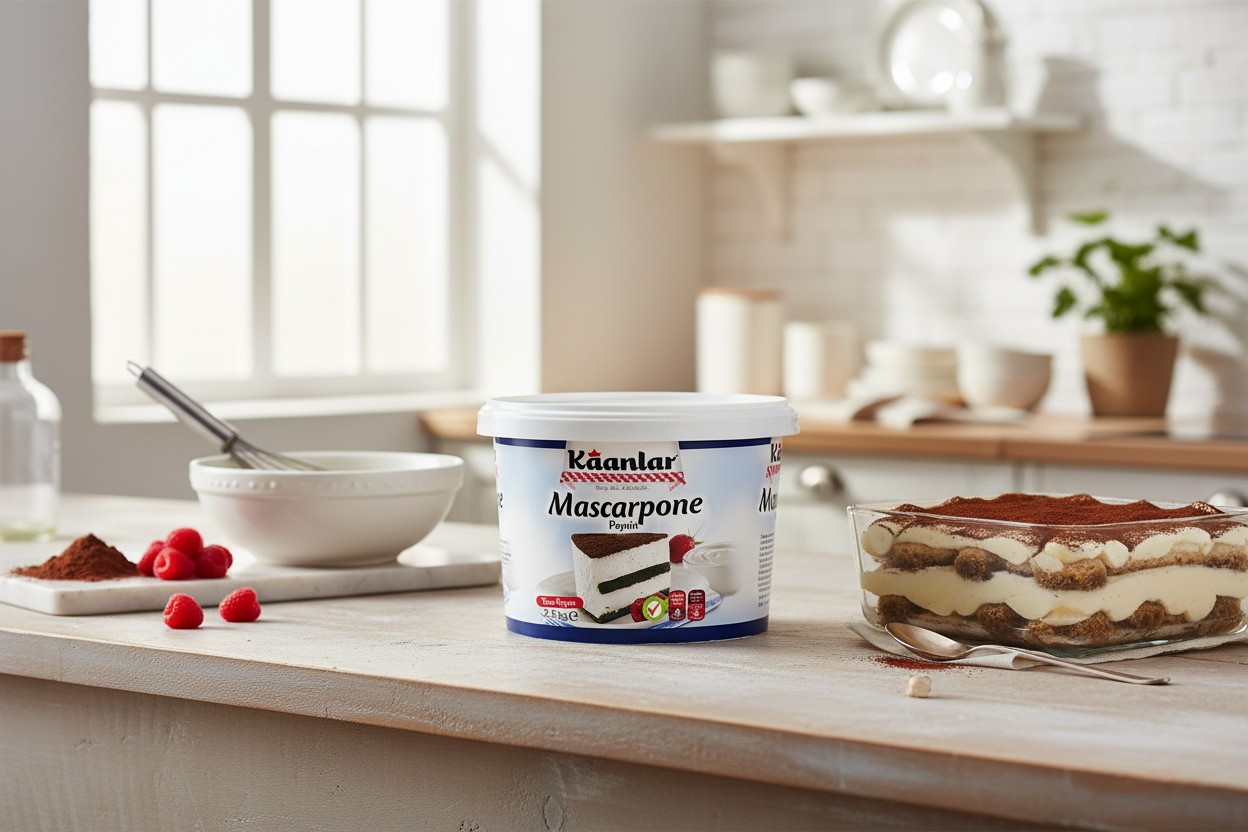
The unsung hero behind many of Italian cuisine’s most beloved desserts is often the same: mascarpone cheese. This creamy cheese, which makes possible the velvety filling of tiramisu, the smooth texture of cheesecake, and the rich texture of countless pastry recipes, has become indispensable in recent years not only for pastry chefs but also for cafes, hotel kitchens, and catering businesses.
Although it may seem simple at first glance, mascarpone is a special ingredient that, when used correctly, takes a recipe to a whole new level and sets it apart with its flavor and texture. In this guide, we’ll cover what mascarpone cheese is, how it’s used in various recipes, the proper storage conditions, and why a high-quality, sustainable supply is essential for professional kitchens.
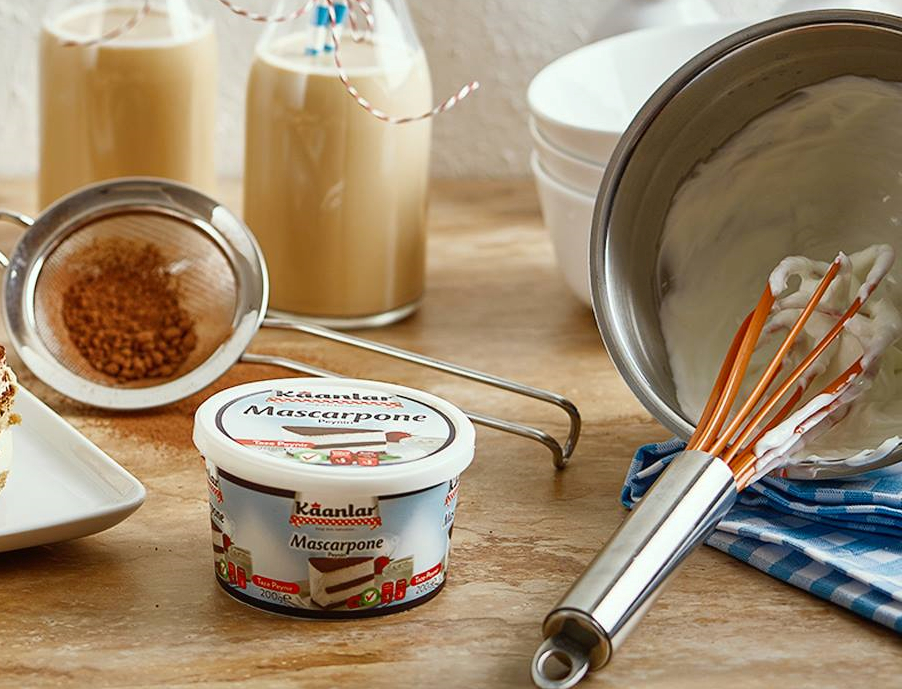
Mascarpone at a glance:
- What it is: A fresh, high-fat cream cheese from the Lombardy region of Italy, made from cream.
- Taste & texture: Smooth, velvety and thick enough to spoon; lightly sweet, milky flavor.
- Use: Tiramisu, cheesecake, pastry and tart creams, mousse; creamy sauces.
- Storage: 2–4 °C in the fridge; use shortly after opening, do not freeze.
What Is Mascarpone Cheese?
Mascarpone is a fresh, creamy dairy product with roots in the Lombardy region of northern Italy. Unlike traditional cheeses, it is not made with yeast or cultures, but rather with pasteurized cow’s milk cream; the cream is thickened with a mild acid to achieve its dense, smooth, and spoonable consistency.
Thanks to this production method, mascarpone has a high fat content and an extremely smooth texture. Its flavor is slightly sweet, milky, and close to neutral, making it a versatile ingredient that can be used in both sweet and savory recipes. In fact, technically speaking, mascarpone is less of a “cheese” and more like a cream that adds texture and flavor.
What Is the Difference Between Mascarpone and Cream?
Mascarpone is often confused with liquid cream or cream cheese, but there are distinct differences between them. Whipping cream is runny and is whipped to increase its volume; mascarpone, on the other hand, is thick enough to be scooped with a spoon and has a rich, creamy texture without needing to be whipped.
Compared to cream cheese, mascarpone is fattier, less acidic, and much softer. Unlike cream cheese’s slightly tangy taste, mascarpone has an almost sweet flavor profile. That’s why mascarpone—not cream cheese—is preferred in desserts like tiramisu: it enriches the dish without weighing down its texture.
| Feature | Mascarpone | Cream (liquid) | Cream Cheese |
|---|---|---|---|
| Texture | Thick, spoonable, creamy | Fluid, whips to volume | Firm, spreadable |
| Fat content | High (~40%+) | Variable | Medium |
| Taste | Lightly sweet, milky | Neutral, creamy | Slightly tangy |
| Typical use | Tiramisu, cheesecake, pastry cream | Whipped cream, sauces | Cheesecake base, spreads |
In Which Recipes Is Mascarpone Used?
The most well-known use of mascarpone is undoubtedly tiramisu. When mascarpone, whipped with egg yolks and sugar, is layered with ladyfinger cookies dipped in espresso, it forms the heart of that classic Italian dessert. However, mascarpone’s versatility isn’t limited to tiramisu.
In pastry making, mascarpone is often used to stabilize creams and achieve a richer texture. Some practical uses include:
- Tiramisu: A classic use; the main ingredient in the creamy filling.
- Cheesecake: It produces a smoother result when used with or instead of cream cheese.
- Cake and pastry fillings: When combined with whipped cream, the result is a filling that is both stable and rich.
- Mousse, tarts, and cupcakes: Ideal for light and velvety fillings.
- Savory recipes: It is also used to thicken risotto, enrich creamy pasta sauces, or add creaminess to vegetable purees.
In hot dishes, mascarpone is usually added at the very end, after the dish has been removed from the heat; this allows it to blend into the dish without curdling, preserving its silky texture.
How Do You Store Mascarpone?
Since mascarpone is a fresh dairy product, maintaining the cold chain is critical for quality. It is recommended to store it in its original packaging in the refrigerator at a temperature between 2–4°C. Once the packaging is opened, the container should be tightly sealed to limit the product’s exposure to air and odors, and it should be consumed as soon as possible.
Freezing mascarpone is generally not recommended, as the fat and water phases may separate during thawing, causing the creamy texture to break down. Especially in businesses with high order volumes, stocking the product according to consumption rates and monitoring its shelf life helps prevent waste and ensures consistent results in recipes.
Where Is Mascarpone Most Commonly Used?
Mascarpone is one of the most trusted ingredients in professional kitchens. Pastry shops and dessert makers use it in tiramisu, cheesecake, and cake fillings; cafes incorporate it into their dessert offerings; and hotel kitchens feature it in both breakfast buffets and à la carte dessert menus. For catering and mass-production businesses, consistent texture and flavor are also a key part of menu consistency.
At this point, what matters most to businesses is not just the product itself, but the continuity of supply and consistent quality. A mascarpone that delivers the same consistency every time, is kept within the cold chain, and is delivered regularly makes kitchen operations predictable.
Why Is Choosing High-Quality Mascarpone Important?
With fresh, high-fat products like mascarpone, differences in quality are directly reflected in the final result. A good mascarpone should have a smooth texture and be thick enough to scoop with a spoon; its flavor should be clean, milky, and slightly sweet. A grainy texture, a sour smell, or watery consistency are signs that the cold chain has been broken or that the product has lost its freshness.
For businesses, working with a reliable supplier is just as important as choosing the right product. Consistent delivery, proper storage conditions, and consistent quality ensure that the desserts on your menu are served with the same success every day. For more detailed criteria on this topic, check out our guide , “How to Choose a Wholesale Food Supplier.”
At Santral Gıda, we provide the high-quality dairy products that food professionals need through our reliable supply chain, with fast delivery throughout Istanbul; this ensures both quality and consistency for delicate products such as mascarpone.
Conclusion: The Unsung Hero of Desserts
Mascarpone cheese is one of the most prized ingredients in Italian cuisine, thanks to its creamy texture, balanced milky flavor, and versatility. From tiramisu to cheesecake, and from pastry fillings to creamy sauces, it makes a real difference in many recipes—as long as it’s consumed fresh, stored properly, and chosen from a high-quality source.
For professional kitchens, however, the secret lies in consistency: a reliably sourced mascarpone that delivers the same texture and flavor every time is key to maintaining the quality of the menu.
Explore Our Mascarpone Products
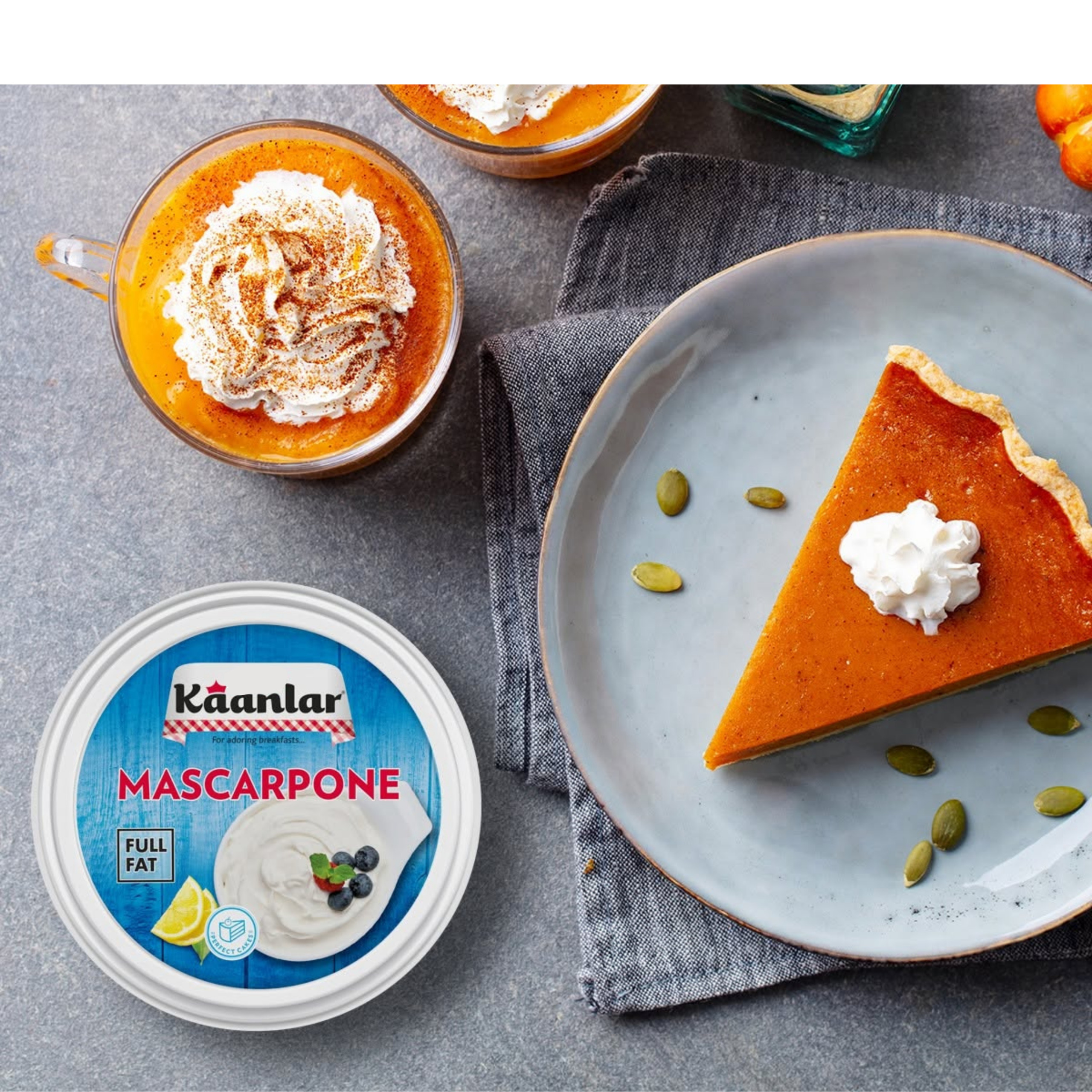
Choosing fresh, high-quality mascarpone is essential for making a difference in tiramisu, cheesecake, and pastry recipes. By checking out the Kaanlar Mascarpone 400 g product available at Santral Gıda, you can add a creamy, rich, and professional touch to your desserts and pastries. If you’re interested in another creamy star of Italian cuisine, you might also enjoy our article “What Is Burrata Cheese?”
For wholesale mascarpone supplies and price quotes, please contact the Santral Gıda sales team.


