

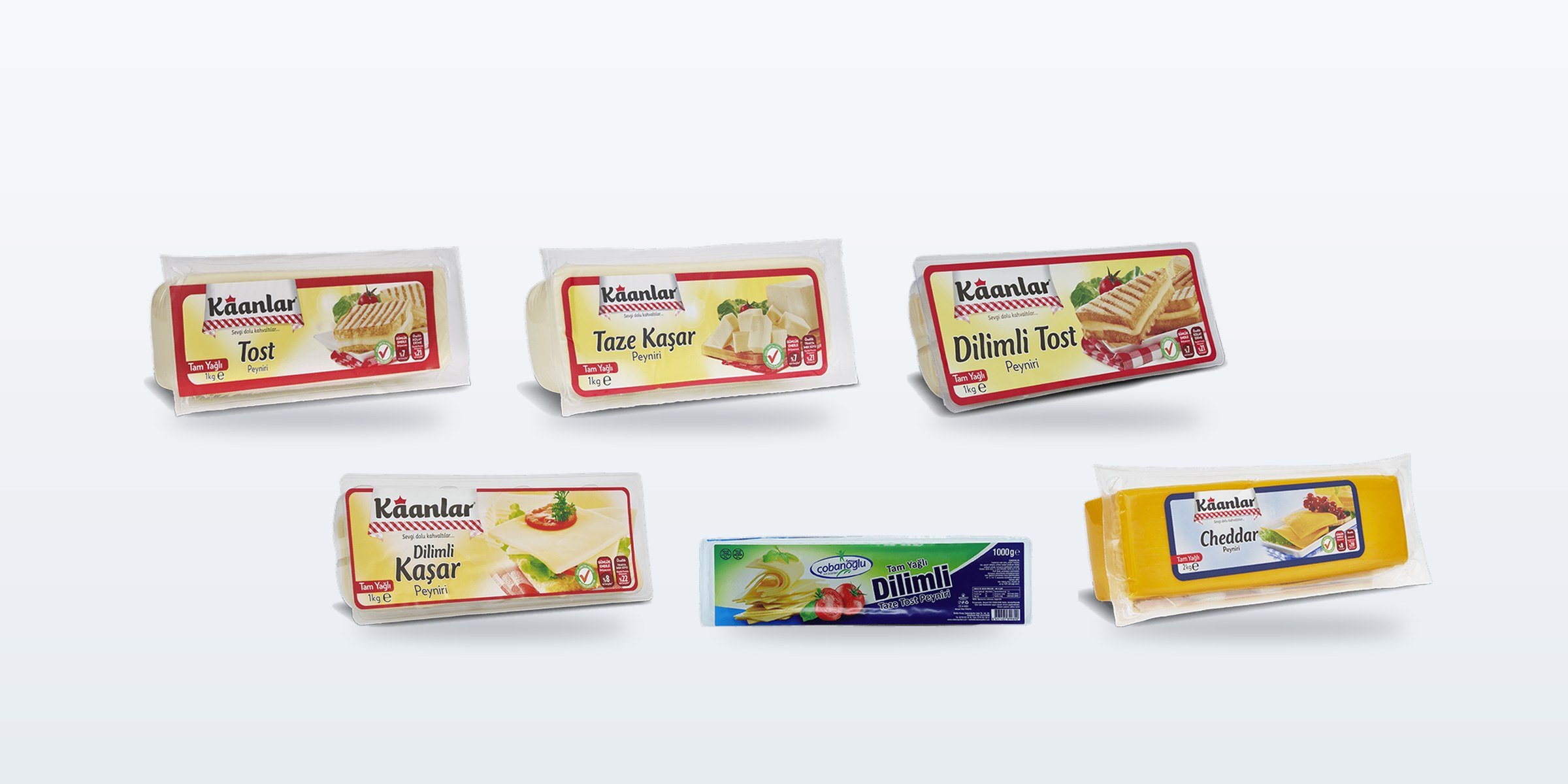
Short answer: There is no single “best cheese” for toast at a café; the right choice depends on serving speed, desired flavor, and cost per serving. If you want speed and consistent portions during peak hours, sliced toast cheese is the way to go; if you prefer a milky flavor and a stretchy texture, try Trakya kashar; and if you want a toast with character on your menu, a blend of aged kashar and cheddar is a good place to start. Below, you’ll find tables listing the options from the Santral Gıda catalog, which ones are suitable for which toasts, and how many toasts you can make from 1 kg of cheese.
Which cheese for which toast?
To speed up the selection process, start by choosing a toast type from the menu. The table serves as a starting point for the most common types of toast found in cafes and buffets; you’ll need to experiment based on your own recipe.
| Toast type | Recommended cheese | Why |
|---|---|---|
| Cheese Toast (Classic) | Sliced toast cheese or sliced Kashar | Consistent slices, quick preparation, even melting |
| Cheese and Sucuk Toast / Assorted Toast | Thracian cheese or block toast cheese | Balanced with the fat from the sucuk; thick slices give it a stretchy texture |
| “Double-cheese” or cheese-loaded toast | Block of cheddar (1–2 kg) | The cost per kilogram is lower than that of sliced cheese |
| Three-Cheese / Gourmet Toast | Aged Cheddar + Cheddar | Aged Kashar adds flavor, while Cheddar adds color and sharpness |
| Light Toast | Light Cheddar | Lower in fat; nutritional information is listed on the package |
What is the difference between toast cheese and kashar?
They are not the same product. Cheddar is a matured cheese with a distinct milky flavor; when heated, it stretches and may release some fat. Products sold under the name “toast cheese,” on the other hand, are produced with a focus on melting behavior: the flavor is more neutral, and the melting process is more controlled.
When shopping, the key distinction lies in the ingredients list on the packaging. Some processed cheese products on the market list emulsifying salts such as sodium citrate or phosphate alongside kaşar curd; these products are closer to melting cheese and do not behave like kaşar. To know which product you’re buying, read the ingredients list; the words “kaşar” or “toast” in the product name alone are not sufficient.
8 options for toast cheese and Cheddar for cafes
This list includes the products from our catalog that are best suited for use in cafes and buffets. Always refer to the product’s own packaging label for technical specifications (fat content, number of slices, shelf life).
1. Kaanlar Full-Fat Toast Cheese 1 Kg (block)
For kitchens equipped with a slicing machine that want to determine the slice thickness themselves. Buying a block reduces the cost per kilogram, and thick slices allow for toast with plenty of cheese. Product page: Kaanlar Full-Fat Toast Cheese 1 Kg.
2. Kaanlar Sliced Full-Fat Toast Cheese 1 Kg
The quickest solution during busy breakfast and lunch hours. Since the slice thickness is consistent, the same amount of cheese is used in every slice of toast, making the cost per serving predictable. Product page: Kaanlar Sliced Full-Fat Toast Cheese 1 Kg.
3. Çobanoğlu Sliced Full-Fat Toast Cheese, 1 kg
A second brand option for sliced toast cheese. Businesses that don’t want to rely on a single brand for their supply can try both products in their own toasters and decide which one works best. Product page: Çobanoğlu Sliced Full-Fat Toast Cheese 1 Kg.
4. Kaanlar Trakya Full-Fat Cheddar Cheese 1 Kg
If you want a toast with a distinct milky flavor that stretches when heated. It’s a popular choice for cheese-and-sausage and mixed toasts. The trade-off is that it releases a small amount of fat at high temperatures; the setting recommendations below will help you control this. Product page: Kaanlar Trakya Full-Fat Kashar 1 Kg.
5. Kaanlar Sliced Full-Fat Kashar Cheese 1 Kg
It combines the taste of Kashar cheese with the convenience of a pre-sliced product. It’s a well-balanced choice for cafes that offer “Kashar toast” on their menu and prioritize speed. Product page: Kaanlar Sliced Full-Fat Kashar Cheese 1 Kg.
6. Çobanoğlu Sliced Kashar Cheese 1500 G
A larger sliced package for businesses with high daily toast volumes. If your consumption rate is high after opening the package, the large package reduces packaging and waste costs. Product page: Çobanoğlu Sliced Kashar 1500 G.
7. 2 kg block cheeses: Teksüt, Kiana, Çobanoğlu
For cafes and cafeterias that have their own slicing setup and consume several kilograms of cheese per week. Options: Teksüt Cheddar Cheese 2 Kg; for those who prefer lower fat, Teksüt Half-Fat Cheddar 2 Kg; Kiana Full-Fat Fresh Cheddar 2 Kg; and for bulk purchases, Çobanoğlu Cheddar 2 Kg.
8. For a toast with character: Old Thrace Kashar and Kaanlar Cheddar
Cafés that serve “three-cheese” or gourmet toast don’t settle for just one cheese. Old Thracian Kashar offers a more mature and sharp flavor; Kaanlar Cheddar Cheese Block (2 kg ) adds color and a slight tangy note. Mixing the two with toast cheese or fresh Kashar balances both flavor and cost.
Block or sliced?
The decision comes down to balancing the labor costs in the kitchen against the cost of the cheese. If you have a slicing machine and the time, use a block; otherwise, pre-sliced cheese is more economical.
| Criterion | Block | Segmented |
|---|---|---|
| Cost per kilogram | Lower | Higher |
| Prep time | Slicing is required | Ready to use |
| Slice thickness | Determined by the kitchen | Fixed |
| Portion size | Depends on the cut | The same on every slice |
| Fire | Cutting waste is produced | Low |
| Suitable business | A high-volume establishment with a slicing machine | Minimal staff, with peak hours |
How many toasts can you make with 1 kg of cheese?
The amount of cheese used on a piece of toast is up to the kitchen; so first, weigh how many grams you use on your own toast. The calculation is simple: divide 1,000 grams by the number of grams per piece of toast.
| Cheese per slice of toast | Toasts made from 1 kg | Toast made from 2 kg |
|---|---|---|
| 25 g | 40 | 80 |
| 30 g | 33 | 66 |
| 35 g | 28 | 57 |
| 40 g | 25 | 50 |
This calculation also tells you how much cheese you need to order based on the number of toasts you make each week. For example, a café that serves 60 toasts a day—with 30 g of cheese per toast—and is open 6 days a week consumes approximately 10.8 kg of cheese per week.
Why do toasts get soggy, and why do they release oil?
Both problems stem from the balance between heat and time. At very high heat, the cheese melts quickly and overflows from the edges; if cooked for too long, it releases its fat and dries out. Practical tips:
- Keep the slice 4–5 mm thick; if the slice is too thick, the outer layer will start to release fat before the center has melted.
- Leave about 0.5 cm of space around the edges of the bread; the cheese spreads toward the edges as it melts.
- Set the toaster to medium heat and adjust the time according to the type of cheese; Cheddar requires a slightly longer time than toast cheese.
- Reducing the amount of cheddar used when pairing it with fatty ingredients like sausage or salami helps balance the total fat content.
The same principle applies to melting and oil release in pizza; for details, see our guide on pizza cheese oil release and browning.
What kind of cheese is used for a light menu?
For cafes offering light options on their menus, Kaanlar Kaşar Cheese Light 250 G in its small package is a suitable choice; it is distributed in boxes of 12. Refer to the nutrition facts table on the product packaging for fat and calorie content, and include a description based on this information in your menu.
How does the choice of toast bread affect cheese consumption?
As the surface area of the bread increases, more cheese is needed to maintain the same appearance. A café switching to jumbo toast bread must recalculate the grams of cheese per slice; otherwise, the toast will either be dry or the cost will increase without being noticed. Options in the catalog: Pan Artisan Jumbo Toast Bread 14×14 (frozen) and Jumbo Toast Bread.
What should you look for on the label when making a purchase?
- Contents: Is it Kashar cheese, or a toasted cheese containing emulsifying salt? This determines how it melts.
- Fat content: Full-fat, reduced-fat, or light. Taste and melting behavior vary with fat content.
- Net weight and number of pieces per package: This information is needed to compare prices per kilogram.
- Storage conditions: Follow the cold storage range indicated on the packaging; reseal the package tightly to prevent air from entering once opened.
- Separation of slices: Some manufacturers recommend removing the desired amount from the refrigerator about half an hour before serving to ensure the slices separate easily.
Wholesale Orders and Delivery
Santral Gıda delivers to all 39 districts of Istanbul 6 days a week, with delivery the day after the order is placed; cheeses are transported via our own refrigerated vehicles, maintaining the cold chain. The prices shown on the product pages are for single-item sales; special prices based on quantity are available for bulk orders and regular purchases. You can view all our Kashar and toast cheese options in our digital catalog; please contact us for a quote. For other product categories tailored to café businesses, please visit our café and bakery supply page.
Summary
- For speed and consistent portions, choose sliced toast cheese or sliced Kashar.
- For a milky flavor and stretch, use Trakya kashar; for more character, use a blend of aged kashar and cheddar.
- If you have a slicing setup, buying cheese in blocks reduces the cost per kilogram.
- 1 kg of cheese yields 25–40 slices at 25–40 g per slice; weigh your own toast first.
- Compare the ingredients, fat content, and net weight listed on the label; the product name alone is not sufficient.
Visit our homepage for information about Santral Gıda’s wholesale food service, which delivers toast cheese and Kashar, as well as bread, sauces, and beverages, all in a single order to cafes.


