


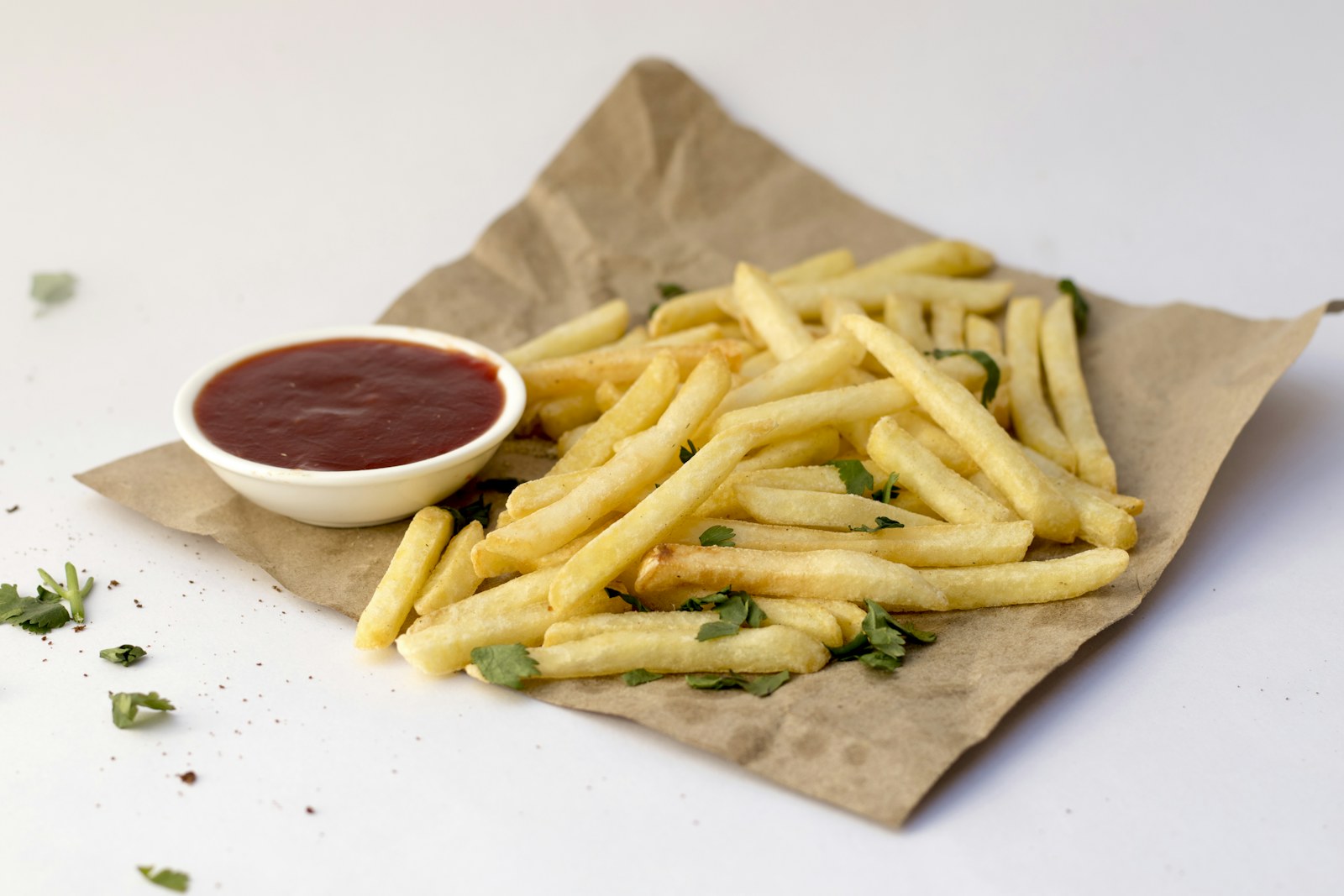
In short: For frozen potatoes, the cut size is a much more decisive factor than the brand. The 7×7 thin cut is ideal for quick service and crispiness; the 9×9 is the most balanced all-purpose cut; and the 9×18 thick cut has a soft interior and makes for an impressive presentation on the plate. The frying temperature should not exceed 175–180 °C for any cut; the cooking time increases as the cut gets thicker. Below, you’ll find a cut comparison, a deep-fryer chart, portion and box calculations, and an explanation of why oil consumption depends on the cut.
- The cut size (7×7, 9×9, 9×18) refers to the square cross-sectional area of the potato in millimeters—thinner cuts are crispier, while thicker cuts are heartier.
- According to regulations, the deep fryer temperature must not exceed 180 °C; in practice, 175 °C is the safest operating temperature.
- A 2.5 kg package yields approximately 19 servings of 130 g each, and a 12.5 kg box yields approximately 96 servings.
- Thin-cut slices use more oil —they have approximately twice the surface area as 7×7 slices of the same weight compared to 9×18 slices.
- Do not thaw frozen potatoes. Melted potato oil cools, becomes doughy, and results in waste.
What do 7×7, 9×9, and 9×18 mean when referring to frozen potatoes?
These numbers refer to the cross-sectional dimensions of the potato stick in millimeters. 9×9 refers to the classic finger-shaped potato stick, which has a cross-section of 9 mm × 9 mm. The 7×7 is thinner, while the 9×18 is twice as thick in one direction—that is, the thick-cut variety known as “steak cut.” Although brands may vary, these measurements are industry standards, so they serve as the only common language for comparison when switching between suppliers.
As the cross-sectional area increases, the potato’s surface area-to-volume ratio decreases. This may seem like a mere technical detail, but in the kitchen, it directly determines three things: crispiness, frying time, and oil consumption. Thin slices have a larger surface area; they fry faster and become crispier, but they absorb more oil and soften more quickly after serving. Thick slices cook in the potato’s own moisture; they stay hot and plump on the plate for longer.
| Section | Texture | Service life | Oil absorption | Typical Use |
|---|---|---|---|---|
| 7×7 thin | Very crispy, thin | Short — must be served immediately | Highest | Fast food, takeout, snacks |
| 9×9 Classic | Balanced: crispy on the outside, soft on the inside | Medium | Medium | General-purpose — restaurant, café, bistro |
| 9×18 thick | Plump and moist inside | Longest | Lowest | Burgers, steaks, side dishes |
| Apple slices | With skin, rustic | Long | Low | Breakfast, brunch, appetizer platter |
At what temperature and for how many minutes should frozen potatoes be fried in a deep fryer?
Frozen potatoes are fried at 175 °C, and the cooking time increases as the slices get thicker: about 2.5–3 minutes for 7×7, about 3 minutes for 9×9, and about 4–5 minutes for 9×18. Manufacturer instructions also fall within this range—for example, McCain’s 9×9 mm product is recommended to be fried at 175 °C for 3 minutes.
The upper limit is not a matter of preference, but a matter of regulation: According to Turkey’s frying oil regulation, the temperature of frying oil must not exceed 180 °C. The same regulation sets two thresholds for oil quality— total polar matter (TPM) must not exceed 25%, and the acid value must not exceed 2.5 mg KOH/g. Oil that exceeds these thresholds is considered waste and cannot be used.
| Temperature | Temperature | Time (approx.) | Basket Capacity |
|---|---|---|---|
| 7×7 | 175 °C | 2.5–3 min | Half a pan |
| 9×9 | 175 °C | 3–3.5 min | Half a tray |
| 9×18 | 175–180 °C | 4–5 min | 1/3 of the tray |
| Apple slices | 175 °C | 3.5–4.5 min | Half a basket |
Please do not fill the basket. When frozen potatoes are added to the deep fryer, they cause the oil temperature to drop suddenly. If the basket is too full, the oil temperature drops below 150 °C; instead of frying, the potatoes soak up the oil, resulting in a soggy, greasy product. Rule of thumb: Fill the basket with about one-tenth of the oil’s volume, and let the oil return to the proper temperature between batches.
How many servings can you get from 1 kilo of frozen potatoes?
A standard restaurant serving of frozen food weighs between 120 and 150 grams. If you calculate based on an average serving size of 130 grams, you’ll get about 7.7 servings from 1 kilogram, about 19 servings from a 2.5-kilogram package, and about 96 servings from a 12.5-kilogram case.
| Serving size | 2.5 kg package | 12.5 kg box (5 × 2.5) | 10 kg box (4×2.5) |
|---|---|---|---|
| 120 g (side dish) | ~20 servings | ~104 servings | ~83 servings |
| 130 g (standard) | ~19 servings | ~96 servings | ~77 servings |
| 150 g (main course) | ~16 servings | ~83 servings | ~66 servings |
| 200 g (serves 2) | ~12 servings | ~62 servings | ~50 servings |
This table shows the fastest way to calculate the cost per serving: divide the price per box by the number of servings, then add the cost of the oil. Businesses that treat potatoes as a “side dish” and don’t factor them into their menu pricing are usually surprised when they realize they’re consuming hundreds of kilograms of the product each month.
Why does oil consumption vary by sector?
This is because the surface area of the potato that comes into contact with oil increases rapidly as the slices get thinner. Whether you cut the same 1 kilogram of potatoes into 7×7 or 9×18 pieces, the weight remains the same—but the total surface area of the 7×7 pieces is roughly double. Since oil absorption is directly related to surface area, thin cuts absorb more oil during frying and also cause the oil to go rancid more quickly.
Practical conclusion: A kitchen that prepares food with thin cuts changes the oil more frequently than one that uses thick cuts. This is a cost item that can easily offset the difference in product cost of a few kuruş per kilogram. For frying oil, 18-liter containers are the most operationally efficient— Frita 18 LT, Turyağ 18 LT, and Bizim 18 LT are common examples of this format. You can view the entire selection in the cooking oils category.
Why are frozen potatoes cooked without being thawed first?
Frozen potatoes should go directly from the freezer into the deep fryer. The ice on the surface of thawed potatoes melts, releasing water, and this water causes two problems in the deep fryer: it lowers the oil’s temperature more than necessary and accelerates the oil’s oxidation. The result is both a soggy product and oil with a shorter shelf life.
Beyond that, potatoes that have thawed and refrozen also pose a food safety risk. If you see clumping in the packaging, ice crystals inside the bag, or sticks that have frozen together in blocks, it means the cold chain has been broken somewhere. Checking for these three signs upon delivery prevents most disputes over spoilage from arising later on.
Storage: −18 °C or lower. The shelves near the freezer door are most susceptible to temperature fluctuations; store frozen potatoes on the back shelves and be sure to follow the first-in, first-out (FIFO) rule.
Should I buy one with a coating or without?
The second distinguishing feature of frozen potatoes is the coating applied after cutting. The uncoated product consists solely of boiled and pre-fried potatoes; the coated product features a thin, mostly starch-based layer on the sticks. This layer slows the release of moisture after frying—meaning the potatoes stay crispy on the plate longer.
The decision depends on this question: How many minutes after the dish leaves the kitchen is it eaten?
- In scenarios where potatoes sit for 10–20 minutes—such as takeout, courier delivery, or buffet service —coated products make a noticeable difference.
- With à la carte service, wherethe food is served directly to the table, uncoated potatoes are usually sufficient and provide a more natural potato flavor.
Battered items may take a few seconds longer to fry and use up the oil a bit faster; if the bulk of your menu isn’t focused on takeout, opting for unbattered items is a reasonable choice.
When should you change the oil in your deep fryer?
Determine when to change the oil based on measurement, not the number of days. Since the threshold specified in the regulation is 25% total polar matter, the most practical way to measure this in the kitchen is using TPM test strips or a digital oil tester. The test strip provides results in a few seconds and can be presented as a record during an inspection.
If you don’t have a measuring device, these five signs are generally reliable enough:
- Darkening of color — if the oil has turned tea-colored, you are nearing the limit.
- Smoke point — If smoke appears at 175 °C, the oil has gone rancid.
- Persistent foam — if the foam that forms when the product is added does not dissipate but remains on the surface.
- A sharp, pungent odor —an odor unrelated to the food being fried.
- The product softens quickly —if it doesn’t stay crispy at the same time and temperature.
Daily filtering is the single most effective practice for extending the life of the oil. Draining the oil at the end of a service shift and removing the debris at the bottom prevents any remaining particles from burning the oil overnight. Keeping the fryer at around 120 °C when not in use, or turning it off completely, also slows down oxidation.
How much frozen potatoes should you order each week?
Start with a simple calculation: number of daily potato dishes × serving weight × number of service days. Divide the result by the box weight and add a 10% safety margin.
| Business Profile | Daily Potato Dish | Weekly requirement (130 g) | Weekly box (12.5 kg) |
|---|---|---|---|
| Café / small bistro | 40 | ~36 kg | 3 boxes |
| Medium-sized restaurant | 120 | ~109 kg | 9 boxes |
| Fast-food restaurant | 250 | ~228 kg | 19 boxes |
| Hotel (buffet + à la carte) | 180 | ~164 kg | 14 boxes |
A kitchen that receives a single delivery per week must store this amount; a kitchen that receives three deliveries per week can generate the same revenue with one-third the storage space. Storage space for frozen products is money—a freezer represents both an investment and an electricity expense. This is exactly what we mean when we say that delivery frequency is a more decisive factor than price; we’ve covered this topic in detail in our guide to choosing a wholesale food supplier.
Bonfrit Frozen Potato Varieties and Wholesale Supply
Santral Gıda’s frozen potato product line includes four Bonfrit cuts. All four are produced to the same standard but are differentiated based on different culinary needs:
- Bonfrit 7×7 — 2.5 kg × 4 boxes · For kitchens where thin-cut, fast service, and crispiness in takeout orders are a priority.
- Bonfrit 9×9 — 2.5 kg × 5 boxes · Classic finger-cut potatoes; the most balanced choice if you’re working with a single cut.
- Bonfrit 9×18 — 2.5 kg × 5 boxes · Thick-cut; perfect for plating burgers and steaks.
- Bonfrit Apple Slices — 2.5 kg × 5 boxes · Rustic slices with skin; ideal for breakfast and brunch menus.
For businesses looking for an alternative brand, Pompat is available in the product line as a 9×9 -kilogram option.
A quick note: During searches, the Bonfrit brand name is often spelled differently, such as “bonfirit” or “bonfrit. “ Both refer to the same brand; both spellings may appear in product codes.
Other frozen foods that share the same fryer
When ordering frozen potatoes, most kitchens also plan for other products that are prepared on the same frying line:
- Potato croquettes (round and cylindrical) — are in high demand at buffets and on children’s menus.
- Frozen onion rings —the natural complement to fries on burger menus.
All of them are listed in the frozen foods category.
Three Questions to Help You Choose the Right Cut
- How many seconds does it take for the product to reach the plate? If you’re ordering delivery or have a long drive ahead, choose the thick-cut (9×18) option—the thin-cut will get soggy on the way.
- How many different cuts can you carry? In kitchens with a single freezer, a 9×9 tray can hold the entire menu on its own; if you can accommodate two trays, 9×9 + 9×18 is the most common combination.
- How often do you change your oil? If you find yourself having to change the oil frequently, switching from fine-grade to heavy-grade oil creates a cost-saving opportunity, regardless of the product’s price.
Wholesale Supply of Frozen Potatoes in Istanbul
Santral Gıda has been supplying wholesale food to hotels, restaurants, cafes, bakeries, and institutional food service businesses in Istanbul since 1995. Frozen products are delivered 6 days a week to all 39 districts of Istanbul via our own cold-chain fleet—so you don’t have to restock frozen potatoes just once a week.
To review our products, you can select items from our interactive catalog and create a quote list. Prices are provided on a quote basis depending on your business and the quantity; we do not sell to individual customers.
Get a wholesale price quote for frozen potatoes → Share your approximate weekly quantity and preferred cut, and we’ll prepare a custom price list for you. Phone: 0212 614 74 80 · WhatsApp: 0533 788 55 76 · sales@santralgida.com


