

Description
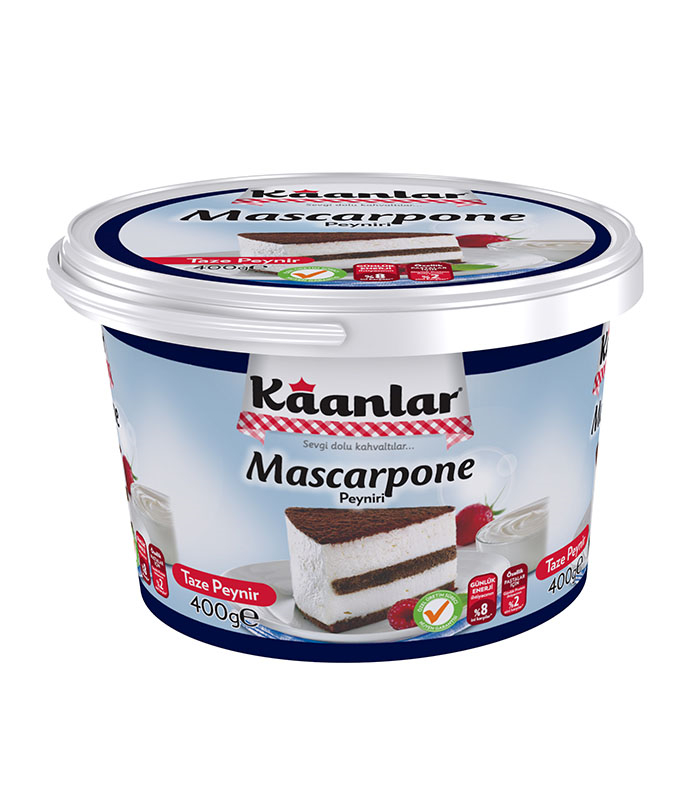
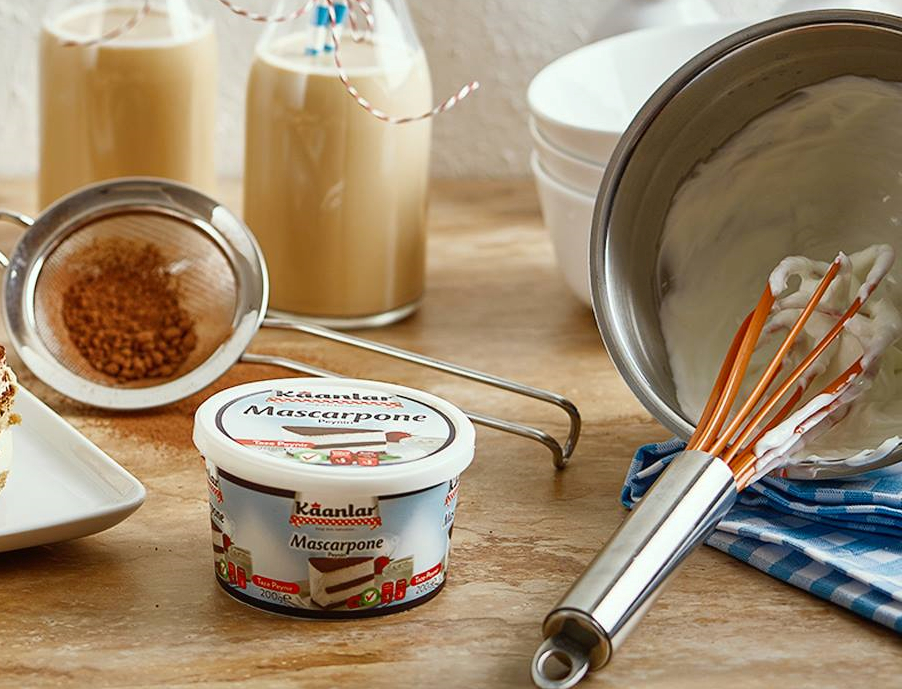
Kaanlar Mascarpone 400 g is an Italian-style fresh cheese made from pasteurized cow’s milk cream, featuring a creamy and smooth texture. The 400-gram package is a portion-sized option suitable for daily tiramisu, cheesecake, and cream production in bakeries, cafes, hotels, and à la carte kitchens. A 5-kg bucket package of the same product is also available for high-volume kitchens.
What is the wholesale price of Kaanlar Mascarpone (400 g)?
The price shown on the page is for a single package; special prices based on quantity apply for purchases by the case (pack of 9) or pallet. Bakeries, cafes, hotels, and catering businesses can request the current case price and a contract supply quote via the quote form or WhatsApp. You can browse our entire cheese selection in the “Cheeses” category or in the interactive catalog.
What is mascarpone cheese?
Mascarpone is a fresh Italian cheese made from cream, not milk. Acid (usually citric or tartaric acid) is added to the cream and heated, and the curd is strained; no rennet or starter culture is used. As a result, its flavor is somewhere between butter and cream, and it is almost entirely unsalted.
Mascarpone’s high fat content is what gives desserts their rich texture and leaves a velvety mouthfeel. Everything you need to know—from production to using it in tiramisu and storage— can be found in our mascarpone guide.
Who is the 400-gram package suitable for?
400 g is the right size for kitchens where daily production varies and where staff do not want to leave the product open. Mascarpone is a product that must be consumed quickly once opened; smaller packaging reduces the risk of waste.
- Artisan bakeries and dessert shops
- Cafes and restaurants with dessert displays
- Hotel pastry shops (daily portion-based production)
- À la carte restaurants with 1–2 mascarpone-based desserts on their menus
- Formulation development and sample testing
400 g or 5 kg? Which one is right for you?
The decision comes down to one question: How many days does it take you to finish a tub of mascarpone? If your consumption is less than 2 kg per week, go with the 400 g size; if it’s more, the 5 kg size means a lower cost per kilogram and less packaging.
| Criteria | 400 g | 5 kg |
| For whom | Artisan bakeries, cafes, hotel bakeries | High-volume bakeries, mass production, catering |
| Approximately one serving of tiramisu | 13–16 | 160–200 |
| Cost per kilogram | Higher | Lower |
| Risk after opening | Low — it runs out quickly | High — strict hygiene and portion control are required |
| Recommended intake | Less than 2 kg per week | More than 2 kg per week |
If you need a larger quantity, you can go to the Mascarpone Kaanlar 5 Kg page.
How many servings of dessert does 400 g make?
Common tiramisu recipes call for about 250 g of mascarpone for 8–10 servings. Based on this, a 400 g package yields roughly 13–16 servings of tiramisu.
When it comes to cheesecake, the math is different: A 22–24 cm mascarpone cheesecake typically requires about 500 g of mascarpone on its own. So, in a kitchen that regularly makes cheesecake, even 400 g isn’t enough for a single pan—in this case, a 5 kg package is a better choice. In cream mixtures, however, 400 g is enough to thicken 1.5–2 liters of filling cream.
Where is mascarpone used?
- Classic desserts: tiramisu, cheesecake, mousse, tart filling, magnolia
- Pastry Making: cake fillings, cupcake frosting, softening ganache
- Hot kitchen: finishing risotto, making creamy pasta sauce, enriching mashed potatoes
- Breakfast and presentation: fruit platter, honey-clotted cream alternative, brunch plates
Kitchens that use whipped cream and filling creams may also want to check out our Puratos Chantypak, Naarmann Cream, and Prima Classic Cream products.
Why does the mascarpone in tiramisu separate or become watery?
The problem isalmost always due to temperature and over-whipping, not the product itself. Mascarpone is a high-fat product; if it’s whipped while still cold—right out of the refrigerator—it will form lumps, and if over-whipped, the fat will separate, leaving a grainy texture.
Three rules to follow: (1) Take the mascarpone out of the refrigerator 20–30 minutes before using it and let it come to room temperature (16–18 °C); (2) Do not beat with a mixer for too long—fold in gently with a spatula instead; (3) Add liquids such as eggs or syrup gradually, rather than all at once. If the mixture starts to curdle, adding a small amount of room-temperature cream and folding it in gently will usually fix it.
What is the difference between mascarpone, labneh, and cream cheese?
All three are fresh, spreadable cheeses, but their fat content and acidity levels differ—which determines how they behave in the dessert. Choosing the wrong one can result in a sour or watery texture in the tiramisu.
| Criterion | Mascarpone | Cream cheese | Labneh |
| Ingredients | Cream | Milk + cream | Strained yogurt |
| Taste | Slightly sweet, neutral | Slightly sour, salty | Distinctly sour |
| Oil | High | Medium | Low–medium |
| The result in the dessert | Velvety, full-bodied | Firmer, slightly tart | Prone to watery texture |
| Compatibility with Tiramisu | The Right Choice | Partially | Not suitable |
If you’re looking for strained cheese, check out our Kaanlar Ricotta 400 g and Kaanlar Ricotta 2.5 kg product pages.
What can be used instead of mascarpone?
Short answer: There is no true substitute for mascarpone in tiramisu. A mixture of cream cheese and heavy cream comes closest, but it adds a slight tang and a firmer texture to the dessert. Ricotta, on the other hand, doesn’t work as a substitute for mascarpone because of its grainy texture; ricotta should be used in its own recipes (cannoli, spinach filling, cheesecake crust).
If you’re looking for a substitute to reduce menu costs, reducing the amount of mascarpone in the recipe and balancing it with heavy cream generally yields better results than eliminating it entirely.
Kaanlar, what is the difference between local mascarpone and imported mascarpone?
Technically, both are produced using the same method. From a professional kitchen perspective, the difference boils down to three factors: cost, lead time, and freshness. Since the cold chain is shorter for domestically produced items, the products reach the kitchen fresher, and restocking is much faster.
A significant portion of the shelf life of imported mascarpone may be spent in transit; conversely, some Italian brands have different fat content and textures. It is recommended that you stick with whichever brand you used in your recipe and avoid switching brands mid-season. For the full Kaanlar product line, please visit our Kaanlar brand page.
What should you look out for regarding allergens and ingredients?
Mascarpone contains milk and dairy products; because it contains lactose, it should not be used in menus labeled as lactose-intolerant. For use in vegetarian menus, please check the current information on the packaging.
Since the fat content, protein, and nutritional values can be updated by the manufacturer, please refer to the label on the batch you have on hand before listing them on the menu.
How long does it last after it’s opened?
Store in unopened packaging at +2 / +4 °C until the expiration date printed on the package. Once opened, consume within 3–4 days.
Never leave an opened package out of its original container; transfer it to a clean, tightly sealed container. Mascarpone absorbs odors very quickly—do not store it in the refrigerator next to onions, cheese, or spicy foods. Do not use it if there is yellowing on the surface, a sour odor, or water separation.
Can mascarpone be frozen?
We do not recommend freezing it . Because of its high fat content, the emulsion breaks down when it thaws, causing the product to become grainy and watery. This texture cannot be restored when used in tiramisu or cream-based dishes.
If absolutely necessary, it may be considered only for items that will be cooked (baked desserts, hot sauces); it should not be used for cold dishes. The right solution is not to freeze the food, but to choose packaging that suits your consumption rate.
Wholesale orders and cold-chain delivery
We deliver to Istanbul’s 39 districts 6 days a week, ensuring the cold chain is maintained for next-day delivery. You can add 5 kg of Mascarpone Kaanlar, Burrata, ricotta, or other bakery ingredients to the same shipment. For the question “What should you look for when choosing a supplier?”, check out our supplier selection guide.
Product Information
- Brand: Kaanlar
- Product Name: Mascarpone Cheese
- Net weight: 400 g
- Quantity per box: 9
- Product type: Fresh Italian-style cream cheese
- Ingredients: Pasteurized cow’s milk cream
- Allergen: Contains milk and dairy products
- Storage: +2 / +4 °C; 3–4 days after opening
- Suitable for use in: Bakeries, cafes, hotels, restaurants, catering services
- Supply type: Suitable for wholesale and professional use
Product content, weight, and packaging information may be updated by the manufacturer; please confirm before placing your order.
If you liked this product
- Browse the entire “Cheeses” category — compare 92 products on a single page
- Interactive catalog — All 1,100+ products; you can create a “Request a Quote” list
- Get a wholesale quote — Next-day delivery to all 39 districts of Istanbul, 6 days a week





Salih Turunç –
Tiramisular için vazgeçilmez oldu. Kıvamı müthiş gerçekten.
Zeynep –
👏👏
Sima Kucuk –
✨
Tahir –
Öncelikle bize vermiş olduğu Güleryüzlü hizmeti ile bizlere destek veren Özden hanıma tiftik ailesi olarak teşekkür ederiz
İrem –
Değerli Özden Hanım’a ilgisi ve ürün kalite standardını koruduğu için çok teşekkür ederiz🙏🏼