

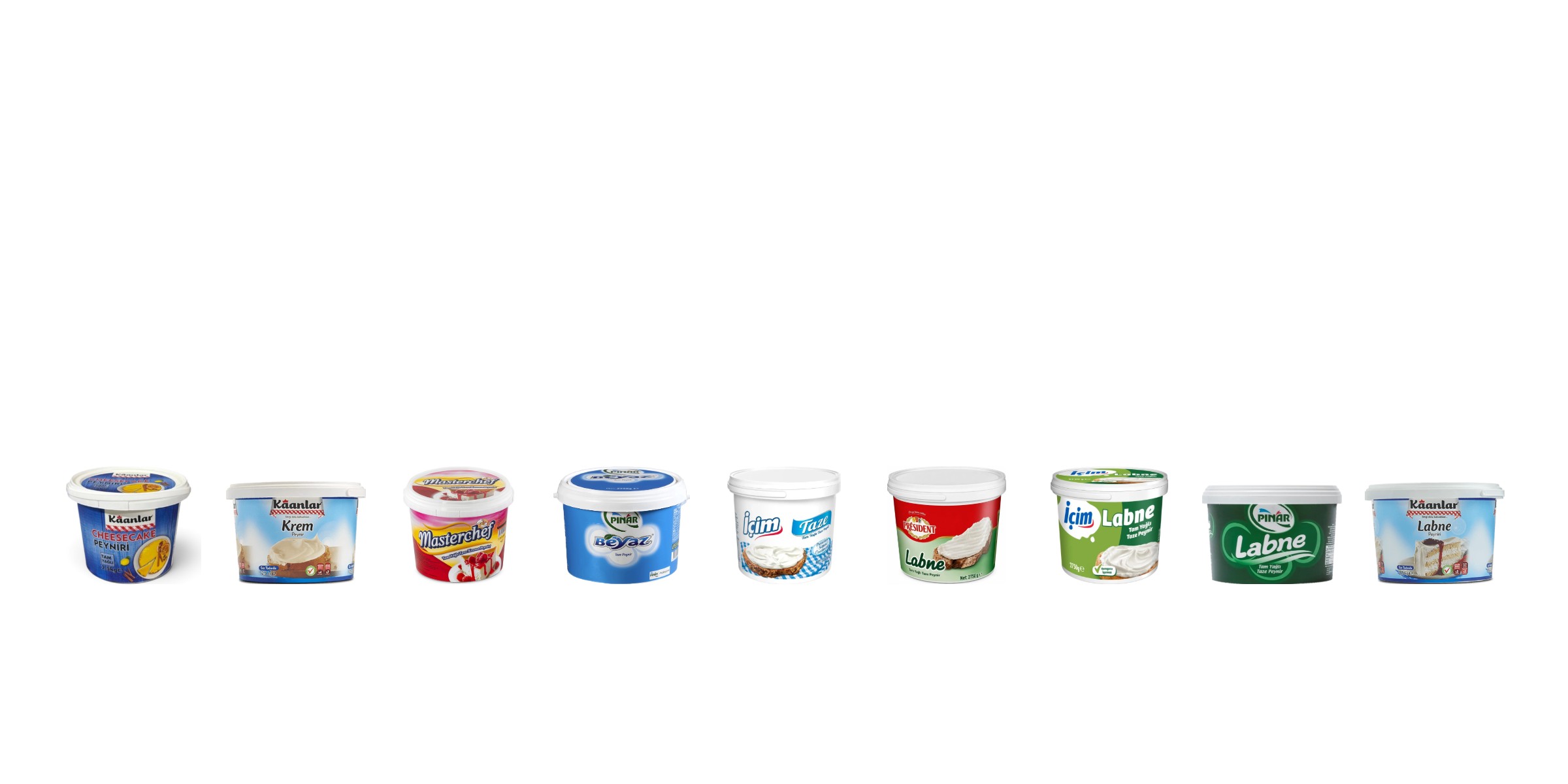
The most common question when buying cheese in tubs is this: Are labne, fresh cheese, cream cheese, and cheesecake cheese the same thing? They’re not, but they’re similar. In this article, you’ll find an overview of their differences, which one is best suited for what, and a price comparison of the tubs available on our website—all in one place.
In short
- Labne: Soft, easy to spread, slightly tangy. The top choice for breakfast, sandwiches, and appetizers.
- Fresh cheese: The general term used in regulations. Pınar Beyaz, İçim Taze Peynir, and Masterchef are sold under this name; the consistency varies by brand.
- Cream cheese: Smooth and mildly sweet. Used for baked cheesecakes, cream, and fillings.
- Cheesecake cheese: Fresh cheese prepared specifically for baking. It slices more evenly.
In the regulations, they are all classified as “fresh cheese”
The Turkish Food Codex Cheese Regulation (No. 2026/24), published on November 10, 2026, defines fresh cheese as a spreadable cheese produced from pasteurized milk and/or cream using starter cultures, with an increased dry matter content. The regulation does not provide a separate definition for labne, cream cheese, or cheesecake cheese. These are commercial names, and all such products legally fall under the category of fresh cheese.
This is why you see the phrase “Full-Fat Fresh Cheese” written below “Labne” on the containers. The main differences between the products lie in the proportions of raw materials used, the thickening agents, the fat content, and the consistency the manufacturer aims to achieve.
The differences between the four types
| Labneh | Fresh cheese (brand name) | Cream cheese | Cheesecake cheese | |
|---|---|---|---|---|
| Texture | Soft, spreads easily | Varies by brand, from soft to firm | Smooth, thick | Firm, holds its shape |
| Taste | Slightly tangy | Light, milky | Neutral, slightly sweet | Neutral |
| Field of expertise | Breakfast, sandwiches, appetizers | Breakfast, pastries, and desserts | Baked cheesecake, cream, fillings | Baked and San Sebastian cheesecake |
| The buckets on our site | İçim, Président, Teksüt, Pınar, Kaanlar | Pınar White, İçim Fresh, Masterchef | Kaanlar Cream Cheese | Kaanlar Cheesecake Cheese |
The texture and flavor information in the table reflects general trends. Two products with the same name may behave differently; try it with your own recipe before adding it to the menu.
Labne
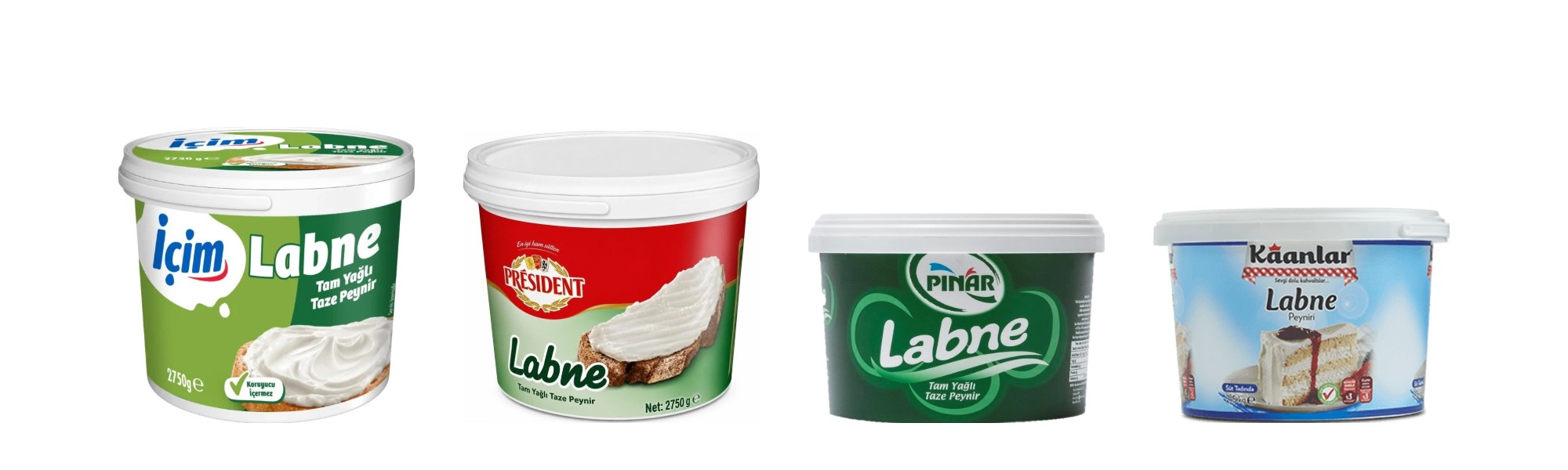
Labneh originates from the Middle East and is traditionally made from strained yogurt. Today, the ingredients in labneh sold in tubs vary by brand. For example, the ingredients list for İçim Labne consists of pasteurized cow’s milk cream, salt, thickening agents, and yogurt cultures. In Teksüt Labne, the first two ingredients are milk and milk fat, and fermentation is carried out using lactic acid cultures. The slightly tangy flavor comes from these cultures.
It’s the most versatile type for use on breakfast plates, with simit and bagels, as a base for sandwiches and wraps, and in appetizers like herb-flavored labneh. It’s also used in cheesecake, where it gives it a creamy and soft texture.
- İçim Labne 2750 G: 759 TL. The packaging states that it contains no preservatives. 17 g of fat per 100 g (manufacturer’s information).
- Président Labne 2750 G: 895 TL. A Lactalis brand. The product page includes a starter recipe for San Sebastian.
- Pınar Labne 2750 G: 945 TL. Part of Pınar’s out-of-home consumption line; each carton contains 4 tubs.
- Kaanlar Labne Cheese 2.5 kg: 760 TL.
- Teksüt Labne 2750 G: 895 TL. Made from pasteurized cow’s milk and milk fat using lactic acid cultures. 17 g of fat per 100 g (manufacturer’s information).
Buckets sold under the name “fresh cheese”
Some brands sell their products under their own names rather than calling them labneh or cream cheese. In the kitchen, these products are often referred to by their brand names: “Pınar Beyaz,” “Masterchef.” Each has a different consistency.
- Pınar Beyaz 2750 G: 1,195 TL. A cream-based, spreadable fresh cheese. Commonly found at hotel breakfasts; each carton contains 4 tubs.
- İçim Fresh Cheese 2750 G: 995 TL. It has a firm texture and holds its shape well. Suitable for fillings, börek fillings, and straight-cut cheesecake slices; it is difficult to spread straight from the tub. 22 g fat per 100 g (manufacturer’s information).
- Masterchef Fresh Cheese 2750 G: 1,360 TL. Labeled as “Full-Fat Fresh Cream Cheese” on the packaging, which features an image of a cheesecake. It is spreadable and creamy.
Cream cheese and cheesecake cheese
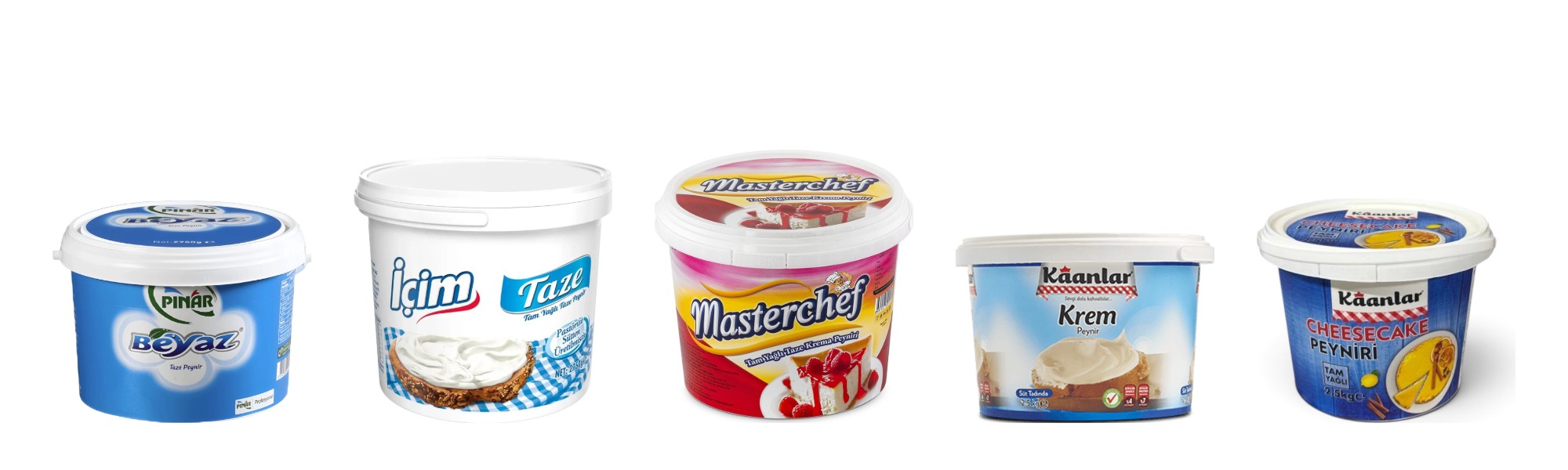
Cream cheese is the equivalent of “cream cheese” in American cuisine. It is thicker and smoother than labneh, and has a more neutral flavor. It is used in New York-style baked cheesecake, carrot cake frosting, and pastry fillings.
Cheesecake cheese, on the other hand, is the name given to products prepared specifically for baking. It is expected to release less moisture during baking and to slice cleanly once cooled. It is used in baked, San Sebastian, and no-bake cheesecakes, as well as in tarts and creamy desserts.
- Kaanlar Cream Cheese 2.5 kg: 970 TL.
- Kaanlar Cheesecake Cheese 2.5 kg: 850 TL. Full-fat.
Mascarpone is used instead of cream cheese in tiramisu and other Italian desserts. For more details, check out our mascarpone guide and the Kaanlar Mascarpone 5 Kg page.
Which one is best for which use?
| Job | Recommended type | Why |
|---|---|---|
| Buffet-style breakfast | Labne or Pınar Beyaz | Easy to spread, served from a tub |
| Sandwich, wrap, bagel | Labneh | Spread thinly and evenly |
| Appetizer, herb-flavored labneh | Labneh | Its slightly tangy flavor pairs well with herbs |
| San Sebastian Cheesecake | Labneh, cream cheese, or cheesecake cheese | Labneh yields a softer result, while cream cheese yields a denser result |
| New York-style baked cheesecake | Cream cheese or cheesecake cheese | Thick, straight-cut slices |
| Chilled cheesecake, mousse | Cream cheese or firm fresh cheese | It holds its shape when whipped cream is added |
| For börek, poğaça, and gözleme fillings | Hard fresh cheese (İçim Taze) | Doesn’t run while cooking |
| Tiramisu | Mascarpone | The traditional cheese used in this recipe |
Price and Weight Comparison
Since the sizes of the buckets vary, the most accurate comparison is based on the price per kilogram. Prices are valid as of November 2026.
| Product | Type | Bucket | Price | Price per kg |
|---|---|---|---|---|
| İçim Labne | Labne | 2,750 g | 759 TL | 276.00 TL |
| Kaanlar Labneh Cheese | Labne | 2.5 kg | 760 TL | 304.00 TL |
| President Labne | Labne | 2,750 g | 895 TL | 325.45 TL |
| Teksüt Labne | Labne | 2,750 g | 895 TL | 325.45 TL |
| Kaanlar Cheesecake Cheese | Cheesecake Cheese | 2.5 kg | 850 TL | 340.00 TL |
| Pınar Labne | Labne | 2,750 g | 945 TL | 343.64 TL |
| İçim Fresh Cheese | Fresh cheese, hard | 2,750 g | 995 TL | 361.82 TL |
| Kaanlar Cream Cheese | Cream Cheese | 2.5 kg | 970 TL | 388.00 TL |
| Pınar Beyaz | Fresh cheese | 2,750 g | 1,195 TL | 434.55 TL |
| Masterchef Fresh Cheese | Fresh cream cheese | 2,750 g | 1,360 TL | 494.55 TL |
How many servings are in a bucket?
The table below shows the cost of two common uses: a 20-gram breakfast serving and a 24-centimeter cheesecake made with 900 grams of cheese. A 2,750-gram container yields approximately 137 breakfast portions, while a 2.5-kilogram container yields 125. Three cakes can be made from both sizes; with the 2.5-kilogram container, there is a 200-gram shortfall for the third cake.
| Product | Breakfast serving (20 g) | Cheesecake (900 g cheese) |
|---|---|---|
| İçim Labne | 5.52 TL | 248.40 TL |
| Kaanlar Labne Cheese | 6.08 TL | 273.60 TL |
| Président Labne | 6.51 TL | 292.91 TL |
| Teksüt Labne | 6.51 TL | 292.91 TL |
| Kaanlar Cheesecake Cheese | 6.80 TL | 306.00 TL |
| Pınar Labne | 6.87 TL | 309.27 TL |
| İçim Fresh Cheese | 7.24 TL | 325.64 TL |
| Kaanlar Cream Cheese | 7.76 TL | 349.20 TL |
| Pınar Beyaz | 8.69 TL | 391.09 TL |
| Masterchef Fresh Cheese | 9.89 TL | 445.09 TL |
These calculations are based solely on the cost of cheese. The cost of sugar, eggs, cream, and the base is not included.
What to Look for on a Label
- Ingredients: Cream, milk, thickening agents, and starter cultures describe the product’s characteristics. The list is sorted by quantity; if cream is listed first, the product is generally higher in fat and creamier.
- Fat content: The amount of fat per 100 g affects the taste and cooking behavior. For example, it is 17 g in İçim Labne and 22 g in İçim Fresh Cheese.
- Fat class: The fat class—such as full-fat or reduced-fat—must be stated on the label. Full-fat products are generally preferred for cheesecake.
- Best-by date and storage conditions: The shelf life after opening varies by brand.
How do you store an opened bucket?
The Cheese Regulation requires that cheese be kept below 10 °C during storage, transportation, and sale. In the kitchen, the bucket should also be kept in the refrigerator and should not be left at room temperature when not in use.
- Use a clean, dry spatula to remove the cheese from the container each time.
- Close the lid after each use.
- At the buffet, do not bring out the entire container; serve only the amount needed.
- Refer to the packaging label for the best-by date after opening.
Order
We ship all the baskets featured in this article to Istanbul’s 39 districts 6 days a week, with next-day delivery. You can view priced items and other cheeses in our digital catalog; for items without listed prices, please contact us. Our buffet breakfast guide, which covers bucket and portion selection for hotel breakfasts, may also be helpful.
Sources: Turkish Food Codex Cheese Regulation (No. 2026/24), Articles 4, 17, and 18; İçim product pages for out-of-home consumption; product packaging. Please refer to the packaging label of each product for ingredients and nutritional information. Prices are as of November 2026.


