

Description
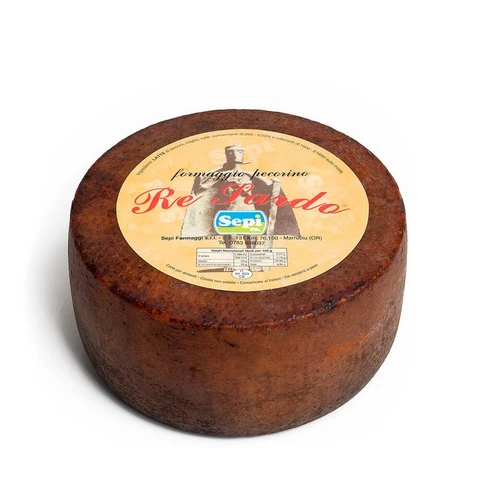
Sepi Re Sardo is a hard Italian pecorino cheese made from 100% sheep’s milk and produced in the Marrubiu (Oristano) district of Sardinia. It is delivered to professional kitchens in whole wheels weighing an average of 3 kilograms; it is grated and used in pasta, risotto, and salad dishes. Santral Gıda provides wholesale food supplies to all 39 districts of Istanbul six days a week.
What is the wholesale price of Sepi Re Sardo pecorino?
The price shown on this page is per KILOGRAM, not per wheel. Since the wheels are natural products, their weights are not exactly the same; they average 3 kg and are weighed and billed at the time of shipment. In other words, a wheel weighing approximately 3 kg costs about three times the price per kilogram.
Special pricing based on quantity applies to box and pallet purchases. You will receive the current price per kilogram and the weight range per unit in writing along with your request for a quote.
What is Pecorino? What kind of milk is Re Sardo made from?
Pecorino comes from the Italian word ” pecora,” meaning “sheep,” and, by definition, is a cheese made from sheep’s milk. In Italy, a cheese made from cow’s milk cannot be called pecorino. Re Sardo is also made from Sardinian sheep’s milk; the island is the center of Italy’s sheep’s milk production.
During the aging process, the cheese loses moisture, its texture hardens, and its saltiness becomes more pronounced. This is why hard pecorino cheeses are typically grated in the kitchen: even a small amount imparts a strong salty flavor and distinct sheep’s milk character to a dish. Always refer to the packaging label on the wheel of cheese you have on hand for information on aging time, fat content, and allergens.
What is the difference between Re Sardo and Pecorino Romano?
“Re Sardo” is a brand name, while “Pecorino Romano” is a Protected Designation of Origin (PDO). Both can be produced in Sardinia—in fact, most Pecorino Romano is produced in Sardinia—but only wheels produced and certified according to the Pecorino Romano DOP specifications may bear the “Pecorino Romano” name. From a culinary standpoint, the practical difference usually lies in the level of saltiness: Pecorino Romano is typically saltier and has a sharper flavor.
| Sepi Re Sardo | Pecorino Romano DOP | Pecorino Sardo DOP | |
|---|---|---|---|
| Status | Brand Name | Protected Designation of Origin (PDO) | Protected Designation of Origin (PDO) |
| Milk | Sheep | Sheep | Sheep |
| Production region | Sardinia (Marrubiu) | Lazio, Sardinia, Grosseto | Sardinia only |
| Character | Hard, crumbly; saltiness varies by batch | Distinctly salty, sharp | Softer, less salty |
| In the Kitchen | Grater and plate-top | Cacio e pepe, carbonara, amatriciana | Table cheese, salad, appetizers |
Here’s what businesses that list “Pecorino Romano” on their menus need to keep in mind: if you use this name on your menu, the product you’re offering must actually be DOP-certified. If you use Re Sardo, listing “pecorino” or “Sardinian pecorino” on your menu is both correct and sufficient.
What is the difference between Pecorino, Parmesan, and Grana Padano?
In a nutshell: Pecorino is made from sheep’s milk, while Parmigiano and Grana Padano are made from cow’s milk. This difference is immediately apparent on the plate—Pecorino is saltier and sharper, while the Grana family has a sweeter, nuttier flavor. In many classic recipes, the two are used together; for example, Genoese-style pesto traditionally calls for half Pecorino and half Parmigiano.
| Pecorino (Re Sardo) | Grana Padano | |
|---|---|---|
| Milk | Sheep | Cow |
| Flavor Profile | Salty, sharp, with a deep, meaty complexity | Sweetish, nutty, umami |
| Salt Usage | Taste the food before adding any additional salt | You can season it more liberally |
| What it does best | Cacio e pepe, carbonara, lamb, fava beans | Risotto, soup, pasta in general |
| Packaging | Whole wheel (~3 kg) | Kilogram / powder |
Their closest counterparts in Turkish cuisine are aged kaşar and Erzincan tulum: all three are aged, salty cheeses that, when used sparingly, serve as the centerpiece of a dish.
What does “taking the whole wheel” mean?
“Whole wheel” means the cheese is purchased in its original, uncut, and unvacuum-sealed state, still in its natural rind. The advantage is clear: the rind acts as a natural protective layer, so the cheese dries out more slowly on the inside and retains its flavor longer than sliced cheese. You can cut as much as you want with a kitchen wheel, and the rest remains protected.
- Take waste into account: the combined loss from peeling and trimming is typically 5–8% of the wheel. Calculate the unit cost by adding this waste.
- Don’t cut the whole wheel at once: the cut surface will dry out. Cut only as much as you need for the week.
- The weight is the basis for the invoice: since the weight of the tires naturally varies, they are weighed at the time of shipment.
How many servings does a 3-kilogram wheel yield?
When using 15–25 g of grated cheese per plate of pasta, a 3-kg block yields approximately 120–200 servings (based on a calculation that accounts for waste). Since the amount used per serving is 8–12 g for salads and appetizers, this number can double.
Practical planning: A restaurant that serves 20 plates of pasta a day will go through one roll in about 6–8 weeks. If your consumption is significantly lower than that, buying smaller quantities instead of a whole roll will reduce waste—talk to your sales representative.
Where is Pecorino used?
Re Sardo is traditionally grated over hot pasta and mixed into it. Three classics of Roman cuisine—cacio e pepe, carbonara, and amatriciana—are traditionally made with pecorino cheese made from sheep’s milk; when made with cow’s milk cheese, the dish changes noticeably.
- Cacio e pepe: just pecorino, black pepper, and pasta water. The quality of the cheese is immediately apparent on the plate.
- Carbonara and amatriciana: along with the eggs and guanciale, these are added after the dish is removed from the heat.
- Risotto and soup: Grate it over the dish just before serving.
- Salad and appetizer platter: thinly sliced or julienned; pairs well with burrata and olive oil.
- Lamb, artichokes, and fava beans: sheep’s milk cheese is a classic pairing with these three in Italian cuisine.
- Pesto: Traditional Genoese pesto uses both pecorino and Parmigiano.
How do you grate Pecorino? Why does it crumble?
As soon as you take the Pecorino out of the refrigerator, grate it while it’s still cold. When hard cheese reaches room temperature, it softens, sticks to the grater’s teeth, and produces a paste instead of powder. A fine-toothed grater (Microplane-style) is best for topping dishes, while a medium-toothed grater is best for mixing into sauces.
- Grate only as much as you need for the day—grated cheese dries out quickly and loses its flavor.
- Clean the grater with a dry brush after each use; oil residue will cause the grater to clump during the next use.
- Use a cheese knife or a short, thick knife for cutting; hard pecorino tends to crumble when cut with a thin knife.
Why does the pecorino sauce separate or clump?
The reason is almost always heat: when pecorino is placed directly into boiling liquid, its proteins coagulate and it releases its fat. The solution consists of three steps, and the order is important.
| Problem | Cause | Solution |
|---|---|---|
| The sauce clumped up | The cheese was added to the boiling pot | Remove the pot from the stove, let it sit for 1 minute, then add the cheese |
| The sauce released oil and separated | There is no starch to bind it | Add 1–2 ladles of the pasta cooking water and whisk to combine |
| The sauce didn’t thicken; it stayed runny | The cheese is coarsely grated | Grate it finely; if grated coarsely, it will melt without mixing into the sauce |
| The food is too salty | The salt in the cheese wasn’t taken into account | Add a little salt to the water, then taste it after adding the pecorino |
How should Pecorino be stored? Is the rind edible?
Store the cheese on the coldest shelf in the refrigerator, at a temperature between 4 and 8 °C, wrapped in wax paper. Don’t wrap the cheese directly in plastic wrap: the cheese won’t be able to breathe, its surface will become damp, and the risk of mold will increase. The correct method is to first use wax paper or cheese paper, then cover it loosely with a container or foil.
Do not serve the peel. Although the natural shell is edible, the outer surface of the nut is usually processed or coated; this nut also has a dark-colored outer surface. Check the package label to confirm whether the shell is edible. You can use pieces of the shell—if uncoated—to add flavor to soups and broths; just remove them before serving.
Is Pecorino vegetarian? What are its allergen properties?
Traditional pecorino production uses animal rennet, which is why most pecorino is not vegetarian. Businesses that list “vegetarian” on their menus should not label this cheese as vegetarian. It contains milk and milk product allergens.
The type of yeast used and the complete list of allergens may vary by manufacturer and batch; base your declaration on the packaging label of the product you have on hand, not on the text on this page.
For which businesses is it suitable?
This is the right product for restaurants that regularly serve Italian pasta, hotel à la carte kitchens, and establishments that offer a cheese platter at their breakfast or brunch buffet. In households with low consumption, a whole wheel of cheese may dry out before it’s finished; in this case, hard cheeses sold in smaller packages are more economical.
Businesses that set up hotel kitchens can check out our hotel supplies page and our “Cheeses” category for our full range of cheeses.
What other products go well with this Pecorino?
The items most frequently ordered by kitchens that prepare Italian menus along with this wheel are:
- Grana Padano and grated Parmesan —served with pecorino or as an alternative to it
- 3.5 kg of mozzarella in water, grated mozzarella, and block mozzarella — for pizza and baked dishes
- Burrata and ricotta, 2.5 kg — for antipasti and fillings
- Mascarpone 5 kg — for tiramisu and other desserts
- Kars Gravyer, Roquefort, and goat cheese — a varied cheese platter
- Kaanlar Kolot cheese and block cheddar — hot dishes
In our mozzarella guide, we explain in detail which types of mozzarella are used where, and in our pizza cheese guide, we explain in detail how the cheese behaves when baked.
How do wholesale orders and deliveries work?
You submit your product list, receive an itemized price quote the same day, and the order you approve arrives at your business the next day. We make deliveries 6 days a week to Istanbul’s 39 districts and surrounding provinces using our own fleet of vehicles. Products requiring a cold chain are shipped in refrigerated vehicles. There is no online payment option on the website; every order is processed via a quote and approval.
You can place your order through our contact page, via WhatsApp, or by creating a list from our online catalog of 1,100 products. If you’re in the process of evaluating suppliers, our guide on how to choose a wholesale food supplier lists the comparison criteria.
Product Information
- Product: Sepi Re Sardo — Pecorino cheese
- Manufacturer: Sepi Formaggi S.r.l., Marrubiu (OR) — Sardinia, Italy
- Milk: Sheep’s milk
- Type: Hard, aged, grated
- Packaging: Whole wheel, approximately 3 kg (billed by weight)
- Pricing: Per kilogram
- Category: Cheeses
- Storage: 4–8 °C, wrapped in wax paper
- Delivery: 39 districts of Istanbul and surrounding provinces, 6 days a week, next-day delivery
The ripening period, fat content, yeast type, allergen information, and best-by date vary by batch— always refer to the packaging label on the wheel you have on hand.
If you liked this product
- Grana Padano Parmesan Cheese KG — a cow’s milk alternative with a sweeter flavor profile
- Cheeses category — Over 90 varieties of cheese
- Online catalog — Browse 1,100 products on a single screen, create your list, and request a quote
- Get a quote — send us your product list, and we’ll send you an itemized price quote the same day





There are no reviews yet.