


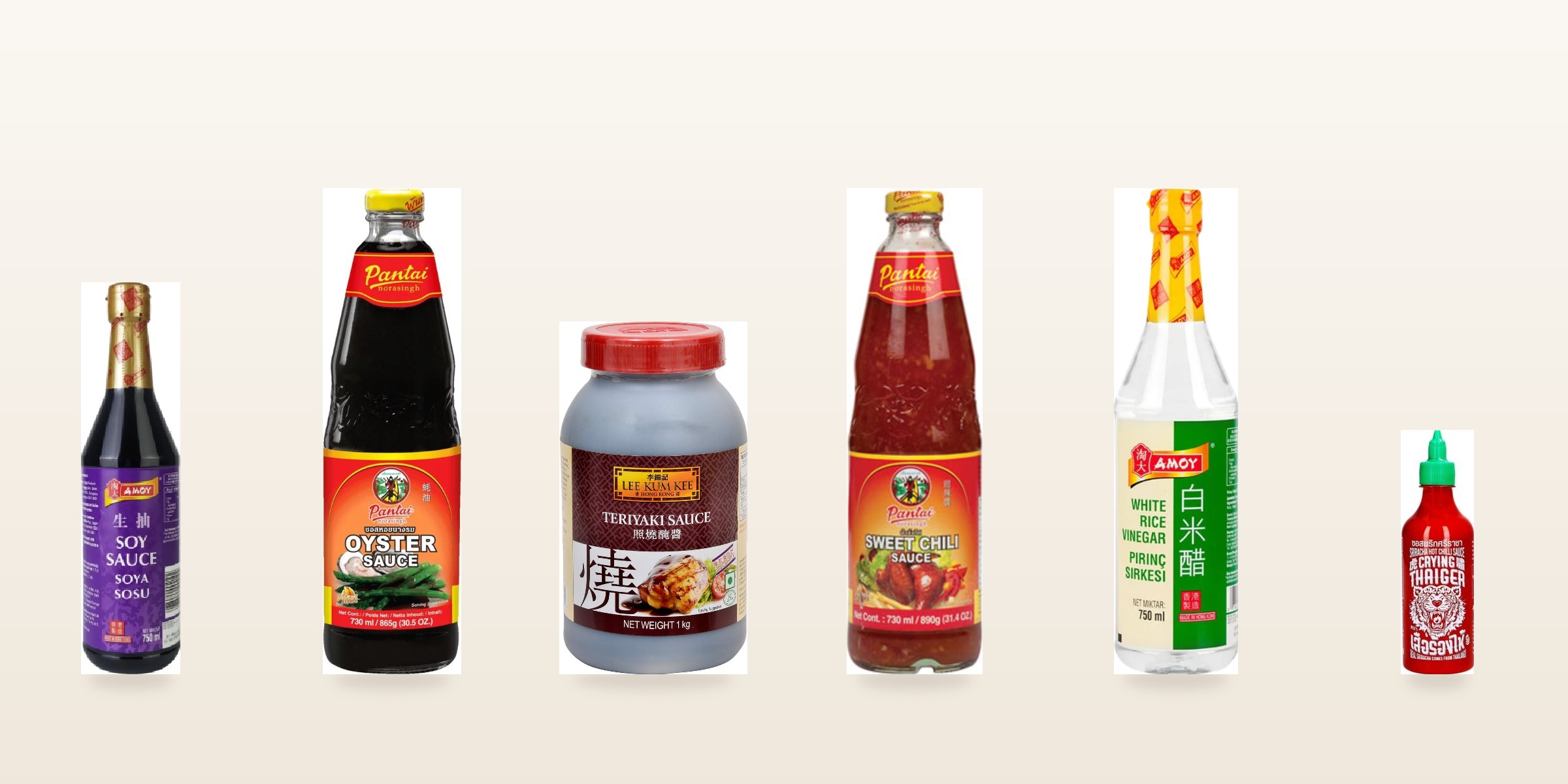
Short summary:
- An Asian cuisine lineup consists of five sauces: soy sauce, oyster sauce, teriyaki, sweet chili, and rice vinegar.
- Sauces containing sugar (teriyaki, sweet chili) are added at the end of cooking, while salty ones (soy, oyster) are added halfway through.
- Oyster sauce is not vegan; soy sauce and teriyaki usually contain gluten.
- In a wok, soy sauce is poured along the edge of the pan, not in the center—it releases its aroma as it evaporates.
- Miso is not boiled; it is added after the dish is removed from the heat.
This guide summarizes on a single page which Asian sauces to use in restaurant and hotel kitchens, whether they can be substituted for one another, and which items to start with when creating a menu. All products are listed in the Sauces & Bases category.
Asian sauces at a glance: What are they used for?
The table below summarizes the characteristics and primary functions of the sauces found in—or that should be found in—your kitchen. Using a sauce in the wrong context is often not a matter of “using too little,” but rather a matter of using the wrong sauce.
| Sauce | Character | Primary role |
| Soy Sauce (Amoy) | Salty, umami | Seasoning base, dipping sauce, marinade |
| Soy Sauce (Teng Tang) | Salty, umami | High-volume kitchen, recipe database |
| Reduced-Sodium Soy Sauce | Mildly Salty | Salt-controlled menu, dietary plans |
| Teriyaki Sauce (Lee Kum Kee) | Sweet and savory, glazing | For marinades and glazes; chicken, salmon, bowls |
| Oyster Sauce | Rich, intense umami | Wok-fried vegetables, noodles, and meat stir-fry |
| Oyster Sauce | Rich, thick | Thai cuisine applications |
| Sweet Chili Sauce | Sweet and mildly spicy | Served with fried foods, spring rolls, as a dip |
| Sweet Chili Beach | Sweet and Spicy | Thai-style dip and glaze |
| Sweet Chili 2 kg (Sauchef) | Sweet and Spicy | High-volume service |
| Sriracha | Spicy, garlicky | Topping, mayonnaise mixture, burger |
| Hot Chili Sauce | Direct heat | Spiciness level, sauce base |
| Sweet & Sour Sauce | Sweet and Sour | Fried chicken, pork/beef with sweet-and-sour sauce |
| Miso (coffee-colored) | Salty, fermented umami | Soup, marinade, sauce enhancer |
| Rice Vinegar | Mildly acidic | Sushi rice, salad dressing, balance |
What are the essential sauces to start with in a kitchen?
For a new cuisine being introduced to the Asian menu, five items are the right place to start. With these five, you can run almost the entire operation of a wok station, a bowl concept, and a basic sushi bar.
- Soy sauce — the foundation of salt and umami in every recipe
- Oyster sauce — adds depth to stir-fried vegetables and noodles
- Teriyaki — protein glaze and bowl sauce
- Sweet chili — dip sauce and side for fried foods
- Rice vinegar — acidity balance and sushi rice
As the menu expands, sriracha (for heat), miso (for soups and marinades), and sweet & sour (for fried dishes) are added. With eight items, the Asian menu is largely covered.
Soy sauce: light, dark, or reduced-sodium?
The difference between soy sauces lies not in the brand but in their salt content and color intensity. Light soy sauce adds flavor, dark soy sauce adds color, and reduced-sodium soy sauce lowers the sodium content without altering the recipe.
| Criteria | Standard soy sauce | Reduced-sodium |
| Uses | General seasoning, marinades, dips | Low-sodium menu, kids’ menu, diet menu |
| Color contribution | Distinct | Lighter |
| Amount on the prescription | Standard | The same or slightly more |
| Suitable for | Wok, noodles, marinade | Salad dressing, side dish, light recipe |
Rule of thumb: Treat soy sauce as if it were salt. When you add soy sauce to a recipe, be sure to taste it before adding any additional salt—the most common mistake in Asian recipes is adding too much salt. For meals intended for people with salt sensitivity, reduced-sodium soy sauce is the right choice.
Are teriyaki and soy sauce the same thing?
No. Teriyaki is a soy sauce-based finishing sauce that’s enhanced with sugar and thickening agents. Soy sauce adds sweetness, while teriyaki coats and adds shine.
This difference has a tangible effect in the kitchen: soy sauce doesn’t cling to the meat—it runs off—while teriyaki forms a glossy film on the surface when heated. You can make teriyaki at home using “soy sauce + sugar,” but the consistency of each serving won’t be consistent. See the Lee Kum Kee Teriyaki Sauce page for details.
What is oyster sauce, and what can it be used as a substitute for?
Oyster sauce is a dark, rich umami sauce made from oyster extract. It thickens the juices from vegetables in the wok and adds a glossy sheen to the dish; it provides a richness that soy sauce cannot.
There is no exact substitute for it. In vegan menus, mushroom-based sauces or a mixture of miso and soy sauce provide a similar result but do not achieve the same consistency. Oyster sauce cannot be used in menus that declare vegan or shellfish allergies —this is a point that is often overlooked.
What is the difference between sweet chili, sriracha, and hot chili?
All three are spicy sauces, but their levels of sweetness vary, and this determines where they’re placed on the menu. Sweet chili is a dipping sauce, sriracha is a finishing sauce, and hot chili is the spice-adjustment sauce.
| Criterion | Sweet Chili | Sriracha | Hot Chili |
| Sweetness | High | Low | Virtually none |
| Bitterness | Mild | Medium–high | High |
| Consistency | Gel-like, granular | Smooth, fluid | Flowable |
| Where | Dipping sauce, spring rolls, side dish for fried foods | On top of a bowl, mayonnaise mix, burger | Adjusting the spiciness of the recipe |
| Guest Profile | Even those who don’t like spicy food will eat it | For those who love spicy food | Only those who love spicy food |
A practical approach to menu planning: Put sweet chili on the plate and offer Sriracha as an optional side sauce. If you’re serving large volumes, this will significantly reduce the cost per kilogram of the 2-kg sweet chili.
Where is sweet-and-sour sauce used?
Sweet & Sour is a sweet-and-sour sauce designed to pair with fried protein. It balances the oiliness of fried crispy chicken, shrimp, and beef strips.
Note: Sweet & sour sauce contains sugar, so it thickens quickly when heated. Do not cook the sauce with the protein—combine the fried food with the sauce just before serving, otherwise it will lose its crispiness.
What is miso, and how is it used?
Miso is a salty paste made from fermented soybeans. Dark (brown/red) miso has been fermented longer than light miso; it has a more intense and salty flavor.
The most important rule: Do not boil miso. After removing it from the heat, stir it into the hot liquid until it dissolves. Boiling it will ruin both its flavor and texture. In addition to soup, it’s used in fish and eggplant marinades, as well as to enrich sauces and dressings. Since our coffee-colored miso is on the richer side, we recommend starting with a small amount in your recipe and increasing it as needed.
Why is rice vinegar an essential ingredient in sushi rice?
Rice vinegar has a much milder acidity than grape or apple vinegar; therefore, it adds flavor without making the rice sour and helps the grains stick together.
A common sushi-zu (sushi rice seasoning) starting ratio by volume is 5 parts rice vinegar : 2 parts sugar : 1 part salt; the mixture is heated until dissolved, then folded into the cooked rice while it’s still hot. This is a starting point—adjust the amount of sugar up or down depending on your rice and the profile of your guests.
If you’re setting up a sushi line, the four essentials are 1 kg of sushi rice, 2 kg of Hakumaki sushi rice, nori sheets, and rice vinegar.
When should the sauce be added to the wok?
The order is more important than the recipe itself. The correct order: sear over high heat → add the vegetables → add the salty sauces (soy, oyster) → add the sweet sauces (teriyaki, sweet chili) just before removing from the heat.
A technical tip: Pour the soy sauce onto the hot edge of the wok, not into the center. The sauce evaporates at the edge in a matter of seconds, and that steam imparts a toasty aroma to the dish—soy sauce poured into the center doesn’t produce this effect; it just boils.
If you add sweet sauces too early, they’ll caramelize, then burn, and leave a bitter taste. The same principle applies to teriyaki and sweet-and-sour sauces. Complementary ingredients: egg noodles, sesame oil, ginger, and curry.
Allergen and vegan information: What should be listed on the menu?
The three most common mistakes made with Asian sauces are: assuming soy sauce is gluten-free, assuming oyster sauce is vegan, and not taking the salt content into account.
| Sauce | Soy | Gluten risk | Vegan |
| Soy sauce | Available | High (wheat is common) | Generally suitable |
| Teriyaki | Available | High | Generally suitable |
| Oyster sauce | Possible | Maybe | No |
| Miso | Available | Varies depending on the type of barley or rice | Generally suitable |
| Sweet chili / Sriracha | Usually not available | Low | Usually available |
| Rice vinegar | None | Low | Moderate |
This table is for informational purposes only and does not constitute a declaration. Formulations vary by manufacturer and batch. Before adding “gluten-free” or “vegan” to your menu, read the current label on the packaging you have on hand.
If you’re opening an Asian menu: the list of appetizers
The list below is the initial order for a kitchen setting up a wok, bowl, or sushi line from scratch. You can add or remove items based on the concept.
| Group | Pen | Why |
| Sauce | Soy sauce | The foundation of every recipe |
| Sauce | Oyster sauce | Wok depth |
| Sauce | Teriyaki | Protein glaze, bowl |
| Sauce | Sweet chili | Dip and side for fried foods |
| Acid | Rice vinegar | Sushi rice, balance |
| Grains | Sushi rice | Bowl and sushi base |
| Grain | Egg noodles | Wok and noodle dish |
| Help | Nori sheet | Rolls and toppings |
| Supplement | Sesame oil | Finishing flavor (used sparingly) |
| Spices | Ginger | Marinade and wok |
You can view the entire product line in the interactive catalog, create your list, and request a quote directly.
How long does opened sauce last, and how should it be stored?
General rule: Sauces with high salt and acid content (soy sauce, rice vinegar) have a longer shelf life once opened; those containing sugar and protein (teriyaki, oyster sauce, miso) are more perishable and should be refrigerated.
- Close the opened bottle or jar after each use, making sure the opening is clean.
- If you’ve transferred it to a squeeze bottle for serving, keep that container in the fridge and refresh it daily
- Never dip a spoon into the raw food; this is the most common source of cross-contamination
- A darkening of color is normal in most sauces; a change in odor and foaming are not.
Always follow the manufacturer’s instructions on the packaging for proper storage conditions.
Wholesale Supply and Delivery
Our entire line of Asian sauces is available for wholesale. We offer next-day delivery 6 days a week to all 39 districts of Istanbul; you can combine sauces, rice, noodles, and spices into a single shipment. Please use our quote form for current box prices and contract supply.
For the question “What should you look for when choosing a supplier?”, you can check out our supplier selection guide and our guide to frozen potatoes for those setting up a frying line.
Source note
The usage recommendations in this guide are based on professional kitchen practices. Allergen information, vegan suitability, salt and sugar content, and storage conditions vary by product and batch; please refer to the label on the packaging you have on hand before making any menu declarations. The sushi-to-water ratio is a commonly used starting formula; it is not a standard.


