


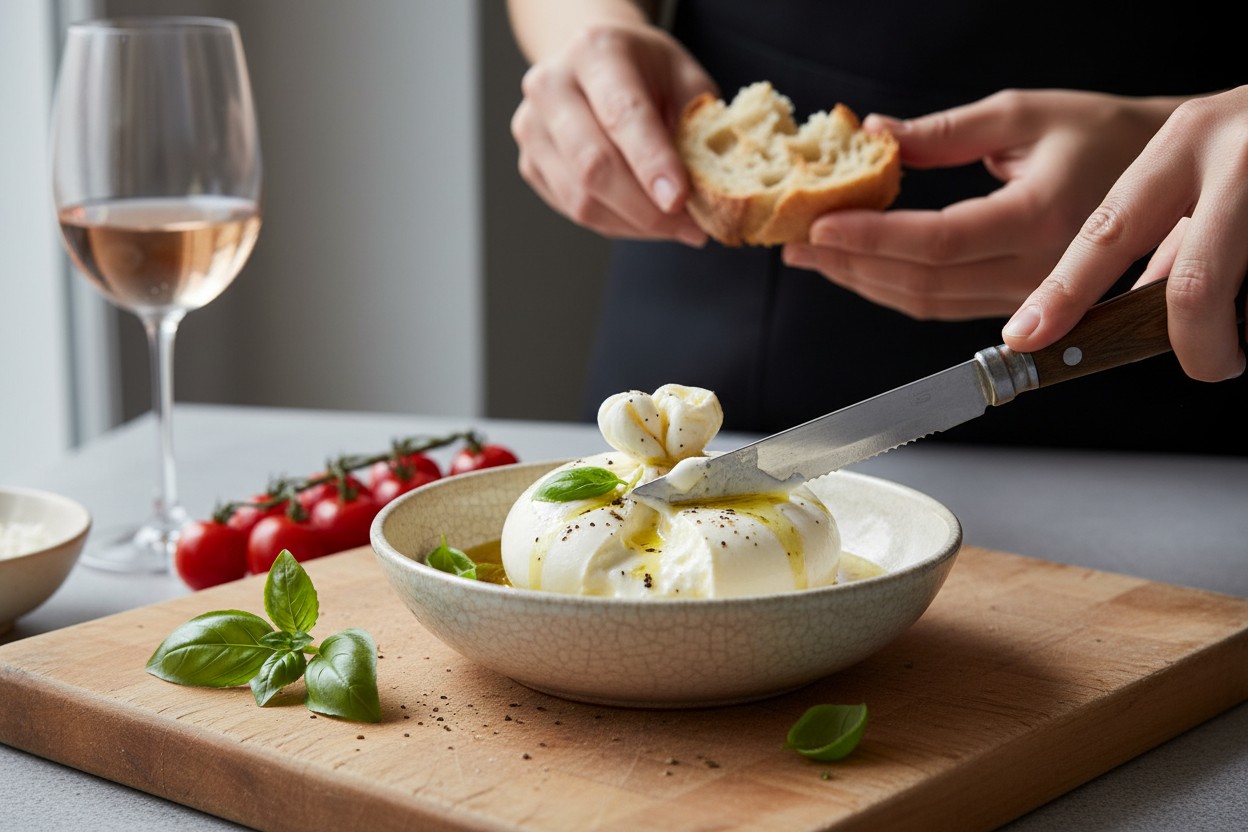
One of the simple yet impressive flavors of Italian cuisine, burrata has become a regular on restaurant menus, charcuterie boards and gourmet recipes. At first glance it resembles mozzarella, but the moment you cut it, the creamy filling that spills out reveals the difference.
Burrata at a glance:
- What it is: A fresh Italian cheese — a mozzarella shell filled with cream and stracciatella.
- Taste & texture: Elastic outside, soft and creamy inside; milky, balanced flavor.
- Use: Mostly served raw — with tomatoes & basil, on pizza (after the oven), fresh pasta, salads.
- Storage: 2–4 °C in its own liquid; use within 1–2 days of opening, do not freeze.
What is Burrata Cheese?
Burrata is a fresh Italian cheese made by filling a mozzarella shell with cream and stracciatella (shredded mozzarella). It is identified with the Puglia region in southern Italy; the outside has a mozzarella-like elastic texture, while the inside is soft, fluid and richly creamy.
This is why burrata is not just a cheese but a texture-driven experience. As soon as a knife touches it, the shell opens and the creamy filling spreads across the plate — the main reason it is so popular in restaurants and on presentation plates.
What is the Difference Between Burrata and Mozzarella?
In short: mozzarella is a firm, whole, heat-friendly cheese, while burrata is a mozzarella shell filled with cream that flows when cut — creamier and better suited to raw serving. The key differences:
| Feature | Burrata | Mozzarella |
|---|---|---|
| Texture | Elastic outside, creamy and fluid inside | Firm, whole, elastic |
| Flavor | Rich, milky, creamy | Milder, more neutral |
| Use | Mostly served raw | Pizza, hot dishes, grated |
| Serving | Fresh, minimal handling | Also used cooked |
How to Enjoy Burrata Cheese?
Burrata is best enjoyed raw with simple, high-quality ingredients; its delicate flavor should not be overwhelmed by heavy sauces. The most classic serving is with fresh tomatoes, basil, extra-virgin olive oil and sea salt.
It also pairs well with arugula, cherry tomatoes, grilled vegetables, avocado, figs, prosciutto, pesto and balsamic vinegar. The key is to choose balanced ingredients that complement its creamy texture.
Which Recipes Can Burrata Cheese Be Used In?
Burrata is used most in cold starters, salads and gourmet plates, and as a finishing touch on hot dishes. It should not be cooked directly; add it just before serving.
For example, burrata added to tomato-sauce pasta just before serving softens slightly with the heat but keeps its creamy texture without fully melting. On pizza, add it right after it comes out of the oven.
Practical serving ideas:
- Burrata and tomato platter: fresh tomatoes, basil, olive oil, black pepper and sea salt.
- Arugula salad with burrata: arugula, cherry tomatoes, roasted pine nuts and balsamic dressing.
- Pasta with burrata: added as a final step to tomato- or pesto-sauce pasta.
- Burrata with grilled vegetables: a hot-cold balance with zucchini, eggplant and capia peppers.
- Charcuterie board: prosciutto, salami, olives, sun-dried tomatoes and sourdough bread.
What to Consider When Serving Burrata?
Take burrata out of the fridge 15–20 minutes before serving; as it approaches room temperature its texture softens and the milky flavor becomes more pronounced. Use a sharp knife and serve on a wide, flat plate.
Olive oil choice matters: a good-quality, fruity extra-virgin olive oil supports the flavor. Instead of many spices, a little salt, freshly ground black pepper and a few basil leaves are usually enough.
How to Store Burrata Cheese?
Burrata should be stored at 2–4 °C in its own liquid and consumed within 1–2 days of opening the package. As a fresh cheese, maintaining the cold chain is critical to its quality.
Freezing is not recommended; it disrupts the creamy interior and the desired freshness is lost when thawed. It is best to buy an amount that matches your consumption plan.
Where is Burrata Cheese Preferred?
Burrata is preferred in both professional kitchens and at home. In restaurants it appears in starter plates, gourmet pizzas, pasta presentations and modern salads; it also adds value to hotel kitchens, cafes, delicatessens and catering businesses.
At home, a restaurant-standard plate can be prepared with a few quality ingredients and little effort.
Why Choosing Quality Burrata is Important?
In a good burrata the outer texture is elastic but not hardened, and the filling is creamy with a fresh milk flavor; the quality difference is reflected directly in the taste. Proper storage, an unbroken cold chain and a reliable supplier are as important as flavor.
For businesses in particular, consistent quality is a core part of sustainable menu success. As Santral Gıda, we support food professionals with reliable wholesale burrata and fresh cheese supply under cold-chain assurance.
Conclusion: An Elegant Touch to the Table with Burrata
With its freshness, creamy texture and elegant flavor, burrata can turn even a simple plate into a special presentation when paired with the right ingredients. For the best result, serve it fresh, at the right temperature, and with quality products.
Check out Burrata Cheeses
Choosing fresh and high quality products is very important in salads, pasta, pizza and charcuterie plates prepared with Burrata cheese. At Santral Gıda
Burrata Napoli Antica 120g
and
You can add a creamy, elegant and delicious touch to your presentations by reviewing Burrata Buffa 150g
products.


