

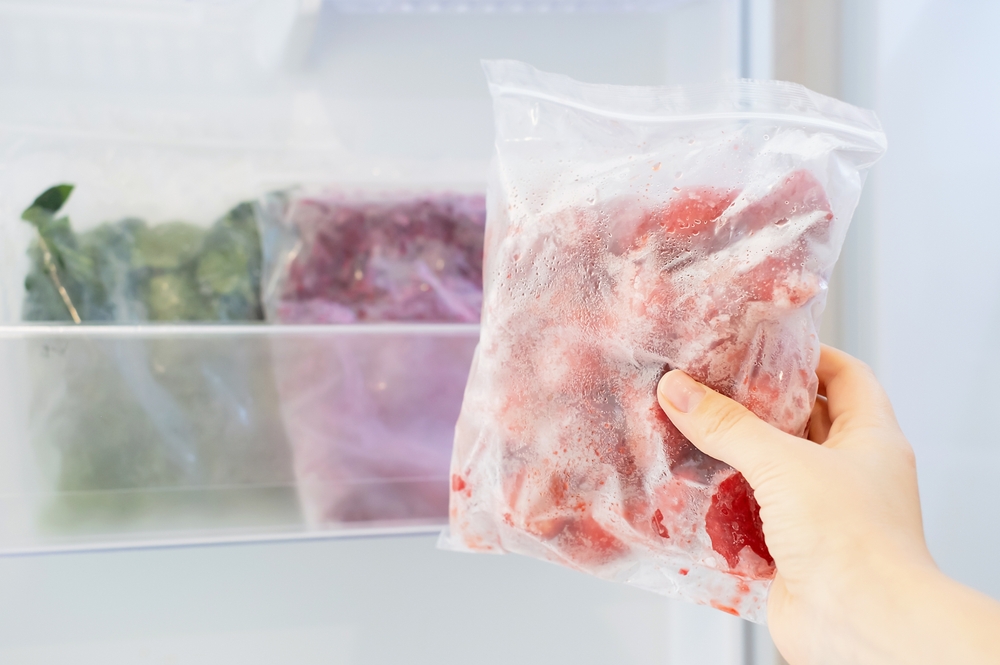
Today, frozen food products have become an indispensable solution for home users as well as for restaurants, hotels and industrial kitchens. It provides operational convenience thanks to its long shelf life, practical use and product standardization. However, in order to preserve these advantages, it is necessary to act consciously about frozen food shelf life and correct storage conditions.
Improper storage, breaking the cold chain or inappropriate thawing methods not only reduce product quality, but also pose food safety risks. In this guide, we discuss in detail the factors that affect the shelf life of frozen food products and safe storage methods.
What is Frozen Food and Why is it Preferred?
Frozen food is obtained by preserving fresh products at -18°C and below with fast freezing technology in a way that preserves their nutritional value and structure.
Reasons why they are especially preferred in professional kitchens:
- Long shelf life
- Ease of stock planning
- Year-round access to seasonal products
- Standard quality
- Reduced waste rate
Sustaining these advantages depends on the right chain of custody.
Factors Affecting Shelf Life of Frozen Food Products
Not all frozen products have the same shelf life. The shelf life of frozen food varies depending on the following factors:
Product Type
- Meat and seafood: 6-12 months
- Vegetables and fruits: 8-12 months
- Pastries 6-9 months
- Ready meals 3-6 months
Ice Cream Technology
Products that are flash-frozen by blast freezing retain their cell structure better and offer a longer shelf life.
Packaging Quality
Airtight and moisture-proof packaging delays product spoilage and prevents loss of quality.
Storage Temperature
Frozen products stored continuously at -18°C and below minimize quality loss.
Correct Frozen Food Storage Conditions
Frozen food storage conditions are critical for product safety. The basic rules to be considered are as follows:
- Storage temperature must be at or below -18°C at all times
- Freezer doors should not be opened frequently
- Products must not be stacked on top of each other
- First in – first out (FIFO) method should be applied
- Product labels and expiration dates must be visible
Regular temperature monitoring is especially important in HoReCa plants.
Importance of Cold Chain
The most important factor determining the quality of frozen products is the cold chain food system. The temperature chain should not be disrupted from production to storage, from storage to transportation vehicles and to operation.
When the cold chain is broken:
- Bacterial growth accelerates
- Loss of texture and flavor occurs
- Shelf life is severely shortened
- Increased risk of food poisoning
This is why reliable frozen food suppliers use special refrigerated vehicles in their transportation processes.
Using Frozen Food in Professional Kitchens
In professional kitchens, frozen food offers great advantages in terms of time management and cost control. However, the correct rules of use must be followed:
- Thawing should be done in the refrigerator
- Do not dissolve at room temperature
- Thawed product must not be frozen again
- Opened packages should be consumed in a short time
- Raw and cooked products should be stored in separate areas
Things to Consider in Industrial Storage
Storage processes are more complex for large-scale enterprises and supermarket chains. Industrial kitchen frozen product use should be managed according to the following criteria:
- Automatic temperature monitoring systems
- Alarm mechanisms
- Periodic equipment maintenance
- Trained warehouse staff
- Recorded stock cycle
Problems caused by improper storage
Improper storage conditions can lead to the following problems:
- Product burn (freezer burn)
- Loss of taste and smell
- Decline in nutritional value
- Microbiological risks
- Damage to brand reputation
Quality Frozen Food is Possible with Proper Storage
To summarize, in order to get maximum efficiency from frozen food products, storage conditions must be managed correctly as well as shelf life. Constant temperature, a strong cold chain, proper storage and responsible handling are the foundation of product safety.
For professional businesses, frozen food provides both operational advantages and quality standards when managed correctly. If you aim to use safe, high-quality and long-lasting frozen food in your business, a strong supply infrastructure is as important as the right storage conditions.


